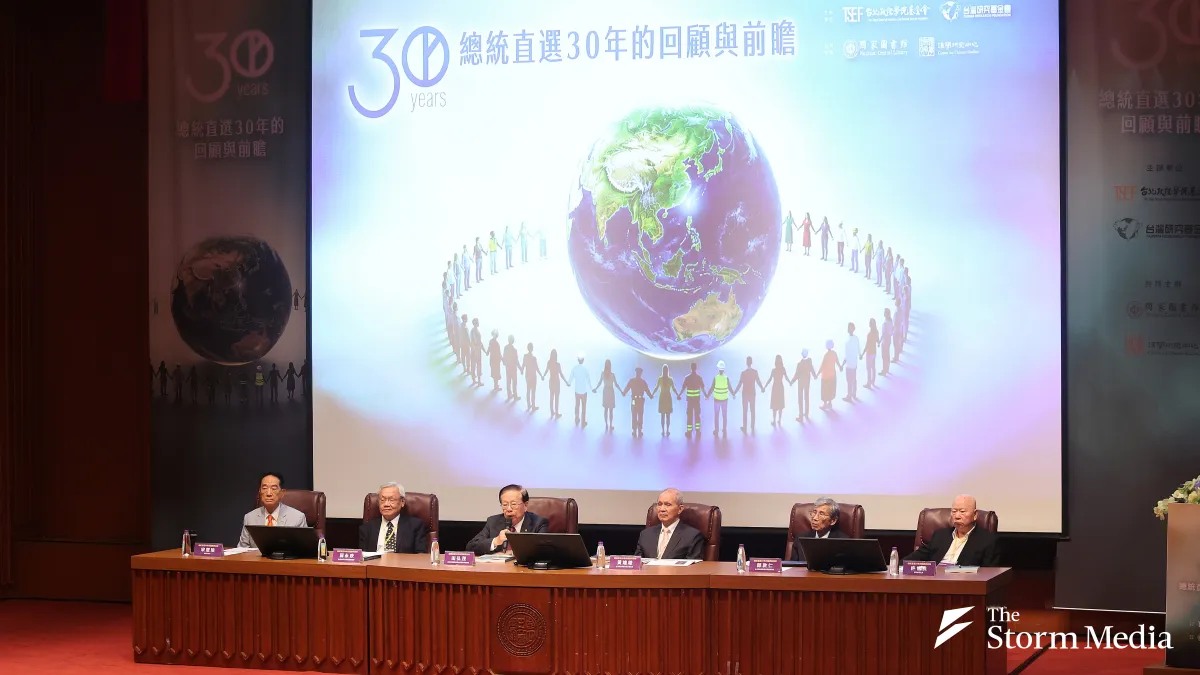
Former President Tsai Ing-wen called on Taiwan's people to remain vigilant in defending their hard-won democracy as a Taipei symposium on September 11 commemorated three decades since the island's first direct presidential election — warning that democratic gains can never be taken for granted.
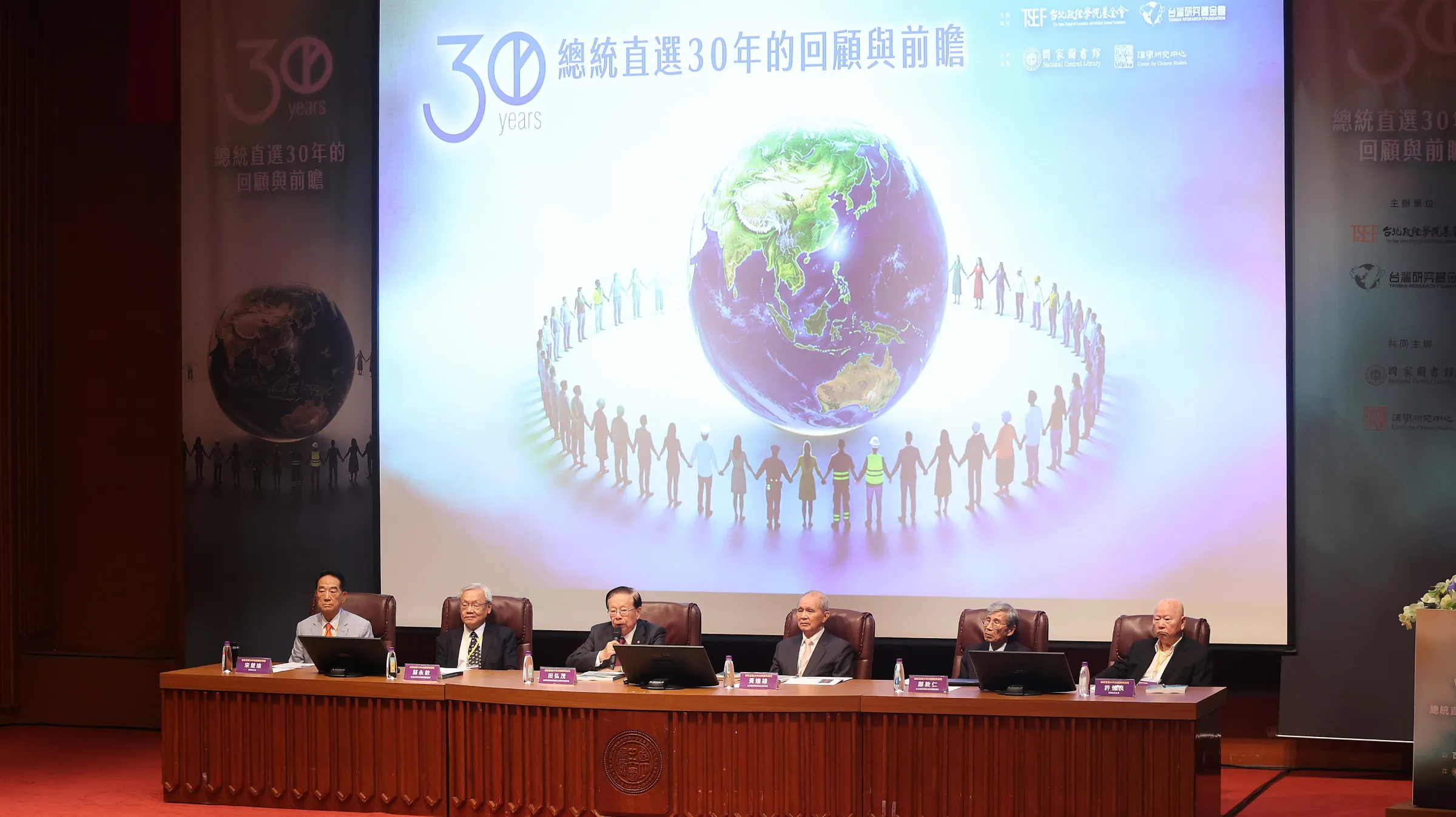
In written remarks delivered at the opening of the "30 Years of Presidential Direct Elections: Retrospect and Prospect" conference organized by the Taipei School of Economics and Political Science Foundation, Tsai said the power to shape Taiwan's future rests solely with its people — and that no single party should hold power permanently.
"True democracy is not one party governing forever," Tsai wrote. "The power entrusted by the people must be used to respond to the people's expectations. Taiwan's present and future must be decided together by the people of Taiwan."
From Martial Law to the Ballot Box
Tsai traced Taiwan's democratic journey from the era of martial law — lifted in 1987 after nearly four decades — through a string of civil society milestones that gradually forced open a closed political system. She cited the 1979 Formosa Incident, the Wild Lily student movement of 1990, and successive campaigns for press freedom, party legalization, and direct legislative elections as building blocks for the landmark March 23, 1996 presidential vote.
"Taiwan's democracy did not fall from the sky, nor was it a gift bestowed unilaterally by any leader," she wrote. "It is the result of many people's years of pursuing freedom, bearing risk, and even paying with their lives and liberty."
She credited former President Lee Teng-hui for responding to public calls for reform at a critical historical juncture and steering constitutional changes that culminated in Taiwan's first popular presidential vote. "The completion of democracy never relies on just one person," Tsai added. "It requires people outside the system to keep pushing, and leaders inside the system to make the right choices at the right moments."
Beijing's Challenge to Taiwanese Self-Determination
Tsai also addressed the persistent pressure China exerts on Taiwan, framing it as a direct assault on the right of Taiwanese people to chart their own future — not simply a geopolitical or military challenge.
"What the other side is trying to shake is not just any one government or any one political party — it is the right of the people of Taiwan to independently determine their own future," she wrote.
She warned that a resilient democracy requires far more than elections alone. It depends on strong institutions, an independent judiciary, a professional civil service, a free and responsible press, and an active civil society. Citizens, she added, must be willing to verify information, participate in public affairs, and maintain the capacity for rational dialogue even amid sharp disagreement.
A Mandate for the Next Generation
Looking ahead to the next 30 years, Tsai called on younger Taiwanese — who have grown up knowing only democratic governance — to understand that the freedoms they enjoy were not inevitable.
"For young people born in a democratic era, democracy may feel as natural as air," she wrote. "But precisely because democracy has become part of daily life, we need the next generation to understand: the freedom to speak freely, to organize political parties, to take to the streets, to criticize the president, and to change governments through ballots — none of this was historically inevitable. It is what many people have worked hard to protect."
Tsai also reflected on her own two terms in office, recalling voters who flew back from abroad to cast ballots in the 2020 presidential election. "A single ballot may look light," she said, "but what it carries is the people's expectation for their country — and a right that many predecessors spent their lives fighting for."
Taiwan held its first direct presidential election on March 23, 1996 — a watershed moment in its democratic transition following decades of Kuomintang one-party rule and 38 years of martial law. Since then, the island has undergone four peaceful transfers of power between rival political parties, a record Tsai cited as proof that democratic consolidation, however fragile, is achievable.
(Related:
Taiwan Reclaims Its Name At Koreas Democracy Birthplace Gwangju As China Storms Out
|
Latest
)