Taiwan's CSBC Teams Up With US Firm Havoc To Build Unmanned Warships

2026-09-11 14:00
CSBC and US autonomous systems firm Havoc announced their new partnership on September 10 US Eastern Time at a signing event in Rhode Island. (Photo courtesy of CSBC)

Taiwan's state-run shipbuilder CSBC Corporation has struck a partnership with US autonomous systems company Havoc to build and maintain autonomous surface vessels (ASVs) on Taiwanese soil, a deal announced September 10 US Eastern Time at a signing event in Rhode Island. The agreement marks one of the most concrete steps yet toward giving Taiwan its own domestic capacity to produce unmanned warships, pairing CSBC's shipyards with Havoc's "Collaborative Autonomy" software platform.

A Local Production Line For Autonomous Warships

Under the agreement, Havoc will supply the autonomous technology while CSBC contributes its shipbuilding, production and long-term maintenance capabilities, the companies said. The goal is to manufacture and service ASV platforms directly in Taiwan rather than importing finished systems, and over time to draw more of Taiwan's domestic supply chain into building the vessels.

CSBC chairman Chen Cheng-hung (陳政宏) said the company has long worked to strengthen Taiwan's independent shipbuilding and maritime defense capacity, and that combining CSBC's production and lifecycle support with Havoc's autonomous technology would also reinforce Taiwan's local supply chain and defense industrial base for the long run.
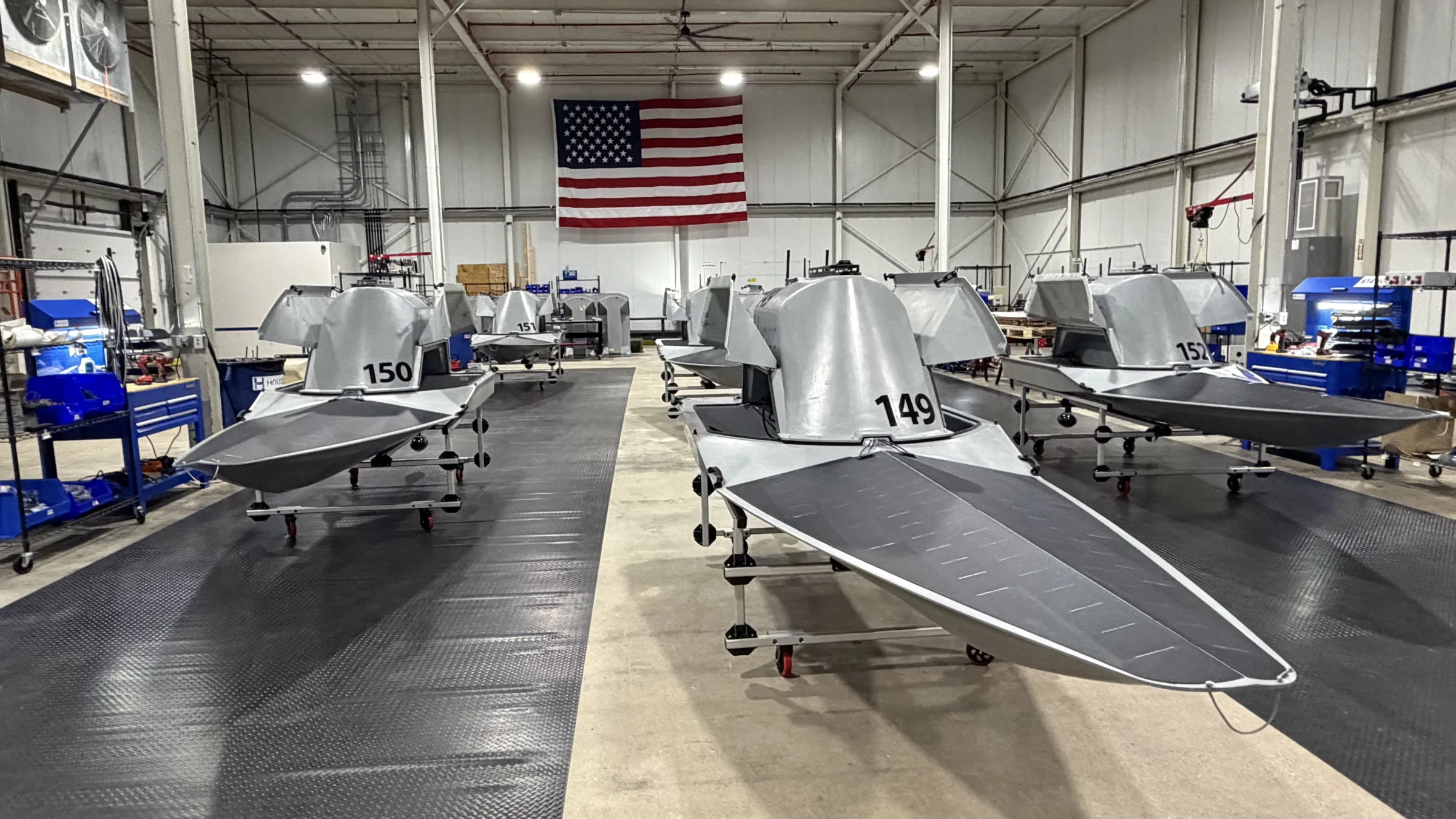
CSBC and Havoc announced their new partnership at a signing event in the US on September 10.
CSBC and Havoc formalized their partnership at a signing event in the US. (Photo courtesy of CSBC)

Aligning With Washington's Defense Priorities

Havoc co-founder and chief executive Paul Lwin said the US Congress had written language supporting co-production with Taiwan, including unmanned systems specifically, into its fiscal year 2026 National Defense Authorization Act (NDAA), and that the new partnership fits squarely within that direction. Lwin described the model as combining American autonomous technology, Taiwan-made vessel platforms and Taiwan's industrial workforce into a partnership built to last.

CSBC said the deal responds directly to Section 1266 of the FY2026 NDAA, which addresses joint US-Taiwan production of unmanned systems, as well as Taiwan's own push for defense self-reliance and domestic manufacturing of unmanned platforms. Both companies said they hope the arrangement can scale over time, using Taiwan's industrial base alongside American autonomous technology to expand production and deployment of self-piloted maritime systems.

What Havoc Brings To The Table

Havoc specializes in autonomy technology that spans multiple domains, built around what it calls a software-defined hardware architecture. The system is designed to let different unmanned platforms across sea, air and land share information, adjust in real time and coordinate missions together, and to keep functioning even when communications are jammed or cut off, with the aim of improving mission performance while reducing risk to personnel.

​You've read it. Now join the conversation — follow us on X,  Facebook and IG. Editor: Yuping Chang​



Latest
Asian Captive Conference 2026 Highlights How Captives Are Utilised as Businesses Navigate Risks
NeuroWatt Launches NeuroTeam, an Enterprise-Grade Agentic AI Workforce to Accelerate AI Agent Adoption
Beijing Watch | China's Military Tests Humanoid Robot Soldiers For The Battlefield
CyberDSA 2026 Draws Global Cyber Leaders for High-Level Talks on AI, Digital Trust and Critical Infrastructure
Taiwan Scores Rare Diplomatic Win as VP Hsiao Defies Beijing in Italy
Chinese Dramas' Top Emotional Moments: Is Your Favorite Actress on the List?
Taipei Security Dialogue | Expert Warns of Likely Limited Blockade Against Taiwan
From Military Threats to Legal Warfare: Inside Xi Jinping’s Four-Step Plan for Taiwan
Does The iPhone Duo Really Have No Crease? Apple Explains The Two Technologies Behind It
Beijing Watch | From Shipping Heir To Beijing's Close Friend, Why Hong Kongers Feel Both Love And Hate For Tung Chee-hwa
Exclusive | Taiwan Drone Hub Chiayi Signs Poland MOU, Eyes Europe
Arasan furthers MIPI I3C® compliance with its participation at the I3C® interop in Taipei
MICROIP Secures Major US$20 Million Smart Residential Community Contract in Taiwan, Accelerating Edge AI Commercialization
Ensign InfoSecurity and TrendAI™ strengthen virtual patching against evolving AI-enabled attacks
Can Doing Good Create Business Value?
The Parisian Macao Celebrates 10th Anniversary
Is Beijing Doing Three Things To Take Taiwan? Chinese Think Tank Unveils Its Governance To Unification Framework
SJourney Enters a New Chapter with Arsenale's 33% Strategic Investment
Taipei Security Dialogue | Former US Defense Official Calls Taiwan's Drone Budget A Single Not A Home Run
ReThink HK 2026 Opens at HKCEC, Bringing Business, Government and NGOs Together to Accelerate Climate Action
SMU and LSE say universities and global academic culture should prioritise purpose and people
They're All Foldable Phones, So What Makes Apple's iPhone Duo Different
Taiyo Holdings Launches Next-generation Semiconductor-packaging Material "FPIM Series," Achieving Its First Three-layer RDL Formation with 700-nm CD on 12-inch Wafers
Could Japan Pass a Taiwan Relations Act? Kitamura And Seki Hei Visit Taiwan To Push For It
IShowSpeed Gets Told Taiwan's Singer Ashin Is From China, A Man In White Saves The Moment
Australian Think Tank Warns Chinese AI Surveillance Could Push Venezuela Into Digital Authoritarianism
Exclusive | Taiwan's Military Buys American Drones Then Discovers The Chargers Are Made In China
AIT's Raymond Greene Points To Israel As A Model For Taiwan's Shrinking Military Manpower