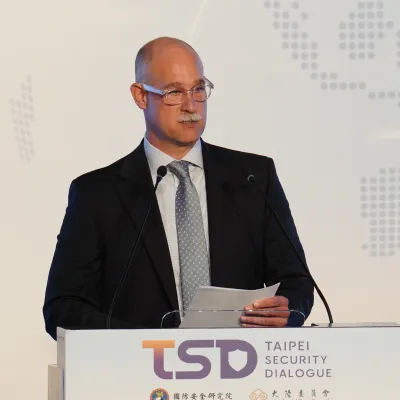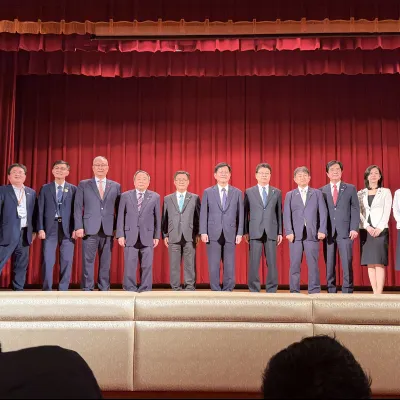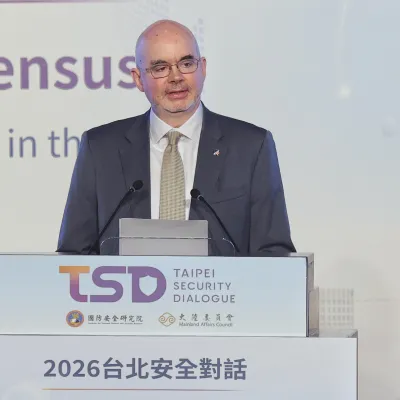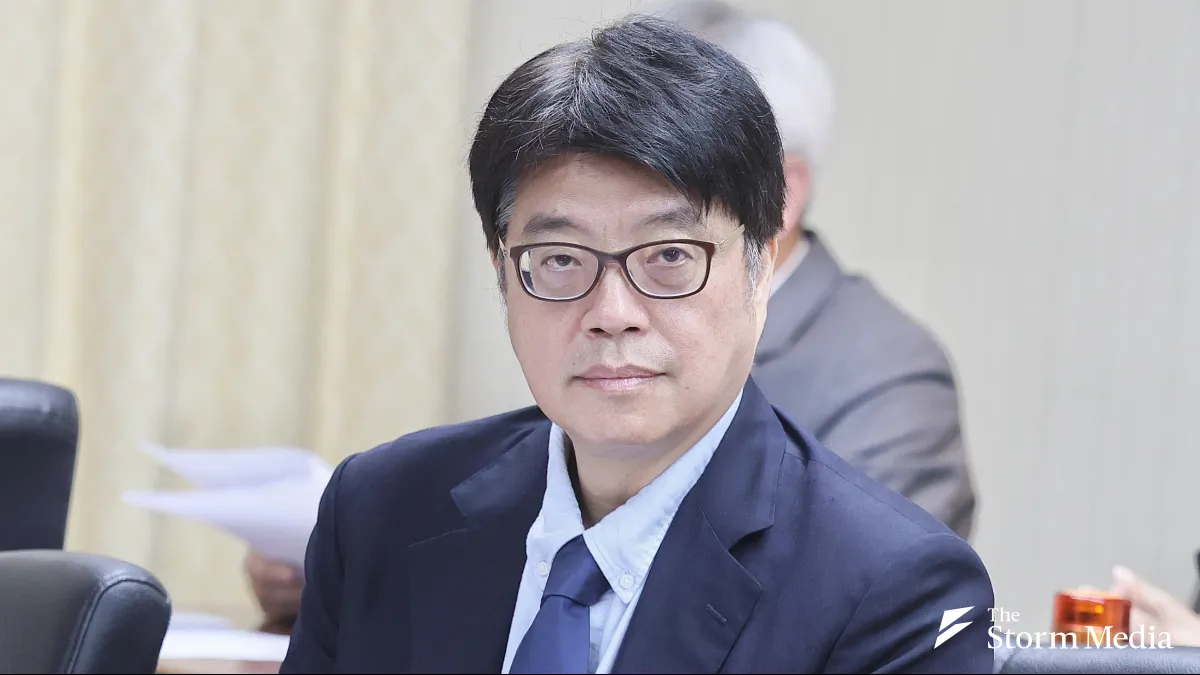
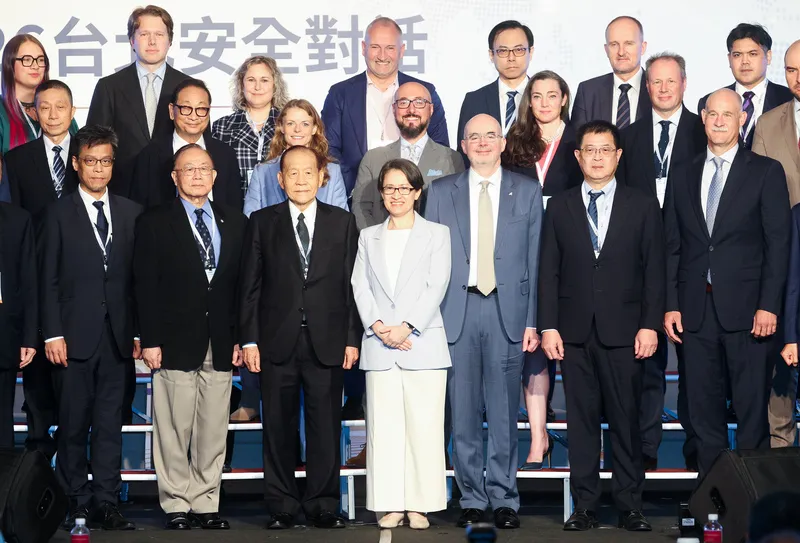
Mainland Affairs Council (MAC) Minister Chiu Chui-cheng (邱垂正) said on September 9 that Beijing is expected to pursue a "govern before unifying" strategy toward Taiwan once Xi Jinping enters a fourth term in 2027, squeezing the jurisdiction of Taiwan's government through measures such as treating Taiwanese citizens as Chinese nationals and stepping up efforts to draw Taiwanese people to the mainland for work, study, daily life and investment, all aimed at altering the status quo across the Taiwan Strait and manufacturing a state of "de facto unification." Chiu stressed that President Lai Ching-te's cross-strait policy is committed to preserving peace and stability across the strait, which he said serves the shared interests of the international community. Chiu made the remarks in a keynote address at the 2026 Taipei Security Dialogue.
Xi's Regime Is The Biggest Threat To Peace In The Taiwan Strait And The Indo-Pacific
Chiu said that under Xi Jinping's leadership, China has posed an increasingly serious challenge to international and regional order, and that understanding why requires understanding the nature of Xi's regime itself. Since Xi took power in 2012, Chiu said, mainland Chinese politics has developed three extreme tendencies. The first is a shift from collective leadership toward highly centralized, even one-man rule, raising the risk of policy misjudgment.
The second, Chiu said, is Beijing's promotion of fervent nationalism to justify aggressive external expansion and provocation, including pursuing military dominance, deploying "wolf warrior" diplomacy and mobilizing the whole of society toward state goals, militarizing the South China Sea, suppressing ethnic minorities, cracking down on Hong Kong's democracy movement, intensifying pressure on Taiwan, and expanding global influence through the Belt and Road Initiative.
The third extreme, Chiu said, is that Xi has built the legitimacy of his extended rule on the historical mission of "unifying Taiwan" and "replacing the United States." Under these three extremes, Chiu argued, Xi's regime has tightened control domestically while expanding aggressively abroad, moving toward what he called an unprecedented "new totalitarianism."
Chiu said Xi has used multilateral mechanisms such as the Shanghai Cooperation Organisation and the BRICS summit to push for a more multipolar international order, while deepening strategic coordination with Russia and North Korea. Militarily, he said, China continues to build up its armed forces, and in July test-fired a submarine-launched intercontinental ballistic missile toward the South Pacific, intimidating countries in the region and making Beijing the single greatest threat to security in the Taiwan Strait and the wider Indo-Pacific.
Beijing Is Advancing A Govern Before Unifying Strategy That Undermines The Status Quo
Chiu said that since Xi secured full control at the start of his third term in 2022, Beijing has applied a combination of military threats, diplomatic suppression, economic coercion, social infiltration, legal warfare and cognitive warfare against Taiwan in pursuit of what he called "forced unification."
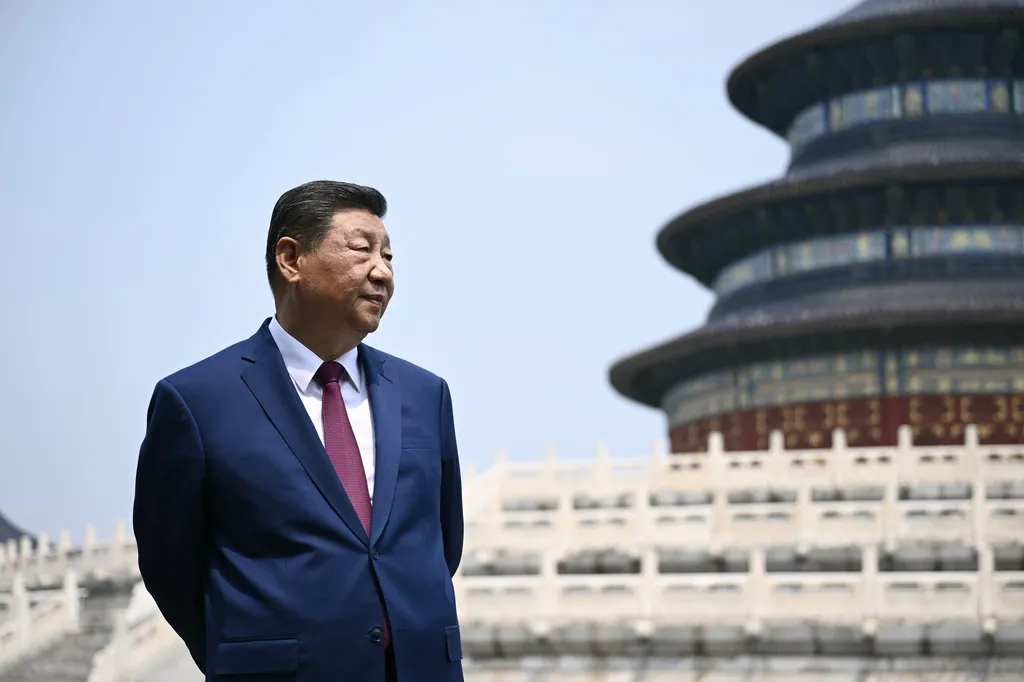
"We assess that once Xi enters a fourth term in 2027, Beijing's Taiwan policy will shift to a 'govern before unifying' strategy, using more aggressive measures to squeeze the jurisdiction of Taiwan's government and attempting to alter the status quo across the strait," Chiu said.
Chiu noted that on August 17, at an event marking the 100th anniversary of Jiang Zemin's birth, Xi quoted Jiang's statement that "the Chinese nation will achieve great rejuvenation... upon completing the reunification of the motherland," and declared that this is "becoming a reality step by step." Chiu said this shows Beijing's current approach is not simply about "unification by force" or "unification through peaceful means," but about shaping a broader narrative of unification through more aggressive, unilateral provocations, an approach he said shows up in four main areas.
First, domesticating administrative and judicial jurisdiction, such as patrolling and enforcing law in the waters east of Taiwan, comprehensively denying and squeezing Taiwan's own jurisdiction. Second, expanding and reinterpreting international law, such as continuing to distort UN General Assembly Resolution 2758 to suppress Taiwan's international space under the banner of "international one China." Third, extending citizen-equivalent treatment by treating Taiwanese people as Chinese nationals, while stepping up efforts to draw Taiwanese to the mainland for work, study, daily life and investment. Fourth, integrating Taiwan's outlying islands through infrastructure such as airports and bridges, pushing deeper integration measures modeled on merging outlying islands with nearby mainland cities.
Chiu said Beijing is continuously expanding these unilateral actions, testing them case by case before normalizing them, using incremental change to produce qualitative change, with the goal of gradually advancing its governing authority and international recognition before the Taiwan question is formally resolved, manufacturing what he called "de facto unification." Once Xi enters a fourth term, Chiu said, Beijing will push the unification process more forcefully, actively promoting unilateral integration, normalizing its "govern before unifying" strategy, and advancing its "Taiwan plan" agenda.
Peace And Stability In The Taiwan Strait Are Key To Global Security And Prosperity
Chiu said that under sustained, multi-pronged pressure from China, Taiwan holds a uniquely important strategic position, serving as an indispensable pillar for global prosperity, peace and stability. First, geopolitically, Taiwan sits at the core of the first island chain, and nearly 50 percent of the world's container ships must pass through the Taiwan Strait, making it critical to global prosperity. Second, in terms of economic and technological strength, roughly 90 percent of the world's most advanced semiconductor chips are manufactured in Taiwan, making it an outstanding and trusted partner within the global high-tech supply chain. Third, on the value of freedom and democracy, Taiwan's democratic experience can cross borders and influence how people in mainland China themselves think about pursuing a better way of life, giving Taiwan an irreplaceable role within the global democratic camp.
Chiu said that maintaining security and peace across the Taiwan Strait is therefore directly tied to the interests of countries around the world. In recent years, G7 members including the United States, Japan, Britain and France, along with the European Union and Indo-Pacific countries such as New Zealand, Australia and the Philippines, have all shown strong concern for peace and stability across the strait, reflecting what he called a significant international consensus around preserving the status quo of peace in the region.
Chiu said preserving peace and stability across the Taiwan Strait and preventing China from altering the status quo is one of Taiwan's core national strategic goals. He said the government's cross-strait policy is neither servile nor confrontational, aimed at maintaining the status quo while firmly defending national sovereignty and a way of life built on democracy, freedom and the rule of law, insisting that Taiwan's future must be decided by its 23 million people. Chiu said the government will firmly safeguard peace across the strait and stability in the region through its "Four Pillars of Peace" action plan, which includes strengthening national defense, building economic security, and deepening partnerships with fellow democracies.
"Taiwan is a responsible member of the international community, and more than that, it is the guardian of peace and stability across the Taiwan Strait," Chiu said. He added that Taiwan cherishes peace but will not give up its freedom, is willing to engage in dialogue but will not accept being belittled, and pursues stability but will not sacrifice its sovereignty or democratic values. Chiu said Taiwan is willing to engage in healthy, orderly exchanges with Beijing on the basis of equality and dignity, but firmly rejects any united front tactics that seek to "package unification as peace," calling on Beijing to face the objective reality of the Republic of China Taiwan's existence and engage in dialogue with Taiwan's democratically elected government. (Related: Taipei Security Dialogue | AIT's Raymond Greene Says Taiwan Holds Three Key Advantages Against China | Latest )