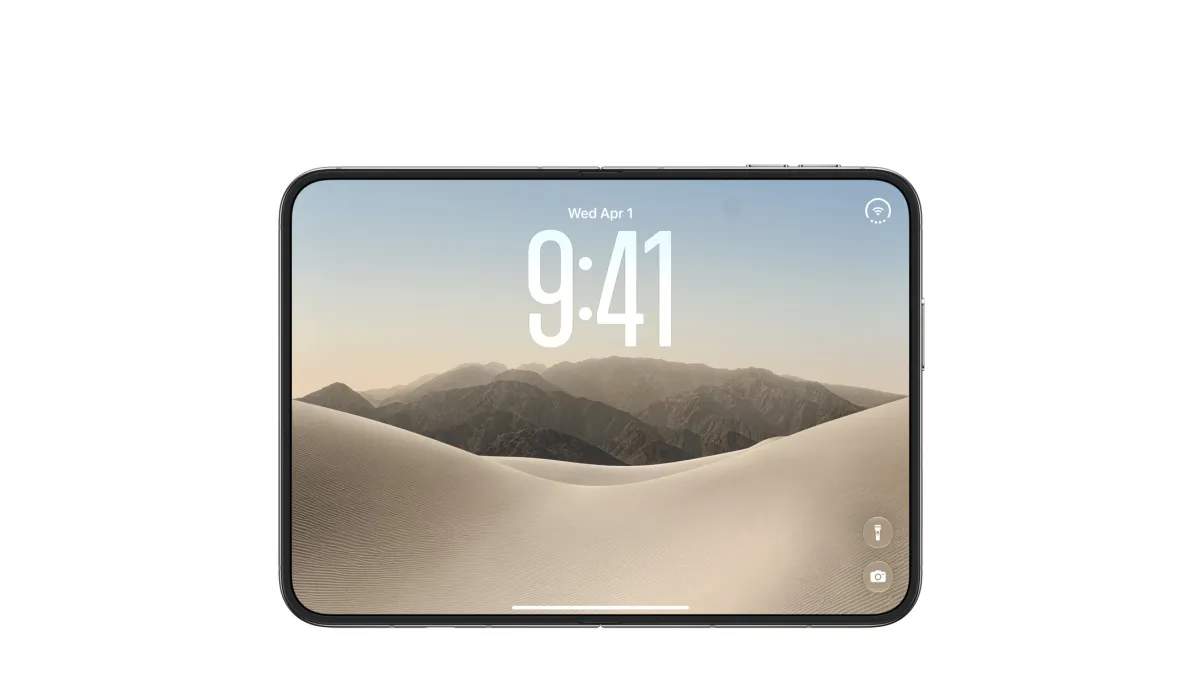
Does The iPhone Duo Really Have No Crease? Apple Explains The Two Technologies Behind It

2026-09-11 09:00
Since the iPhone Duo's debut, its screen crease and durability have become the top focus for Apple fans. Apple says the inner display uses a special optically clear adhesive and nano-texture treatment to distribute folding stress, along with a reinforced

Apple's first foldable phone, the iPhone Duo, has officially arrived, with its 5.4-inch outer display unfolding into a 7.6-inch inner screen, marking the first time a foldable form factor has joined the iPhone lineup. But alongside the excitement, many Apple fans' first question wasn't about performance, it was whether the crease down the middle of the screen would actually be noticeable. The visible fold line running through a foldable phone's display has always been one of the category's hardest problems to avoid, and whether a phone can stay flat after being opened and closed thousands of times over its lifespan directly affects how it feels to use. Apple addressed the question directly on its official website, stating that a "nano-texture treatment" is what makes the crease effectively disappear.
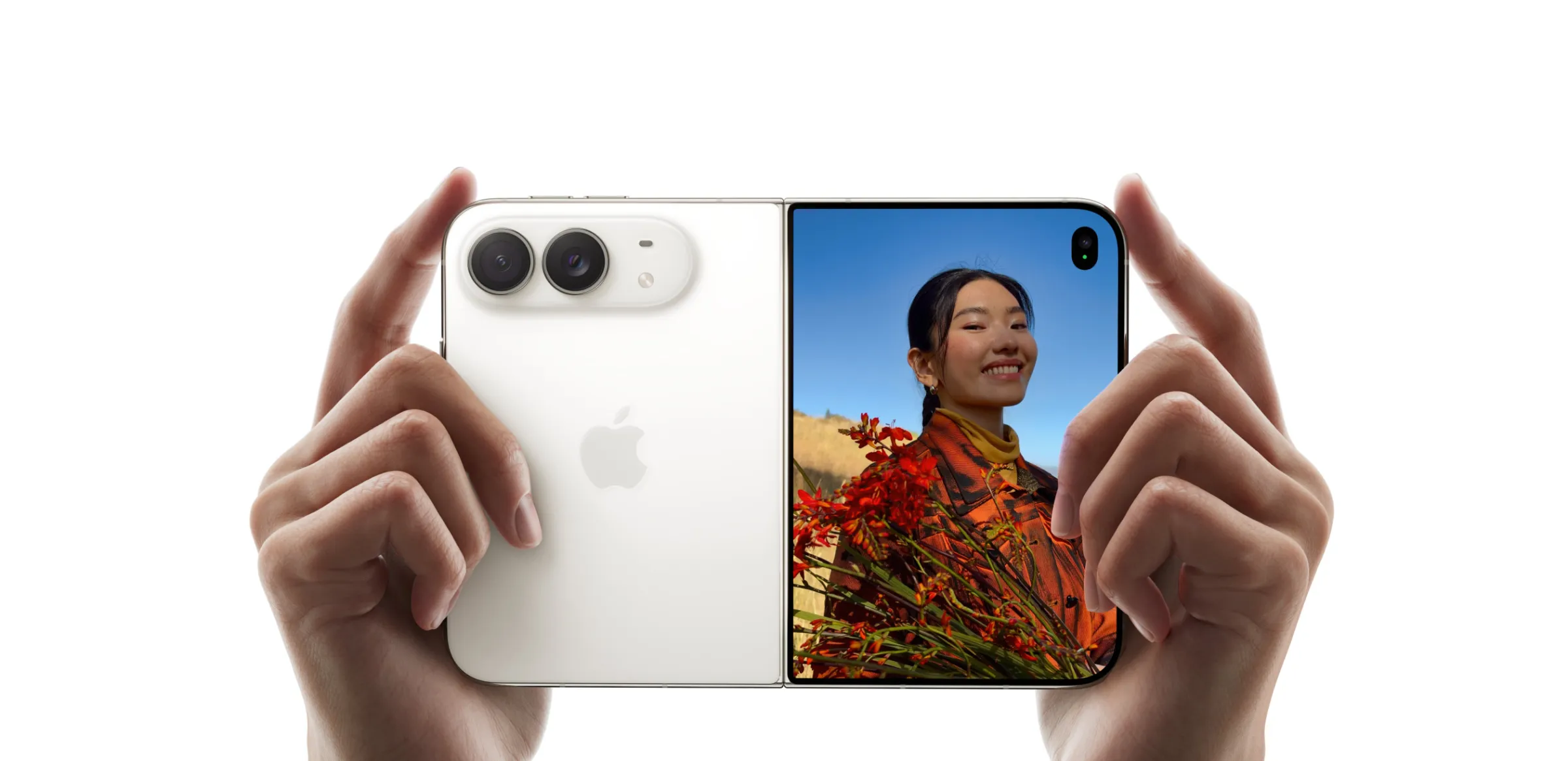
Apple says the iPhone Duo uses a special optically clear adhesive along with a nano-texture treatment to distribute folding stress and minimize the appearance of a crease. (Image sourced from Apple's official website)

Apple Explains The Two Technologies Behind The Reduced Crease

Addressing the concern that has drawn the most attention, Apple laid out exactly how the iPhone Duo tackles the crease problem. The inner display uses a special optically clear adhesive combined with a nano-texture surface treatment, both designed to distribute the pressure the panel experiences more evenly every time it folds and unfolds, reducing the chance that a visible crease forms in the center of the screen. In other words, Apple isn't claiming the display has no crease at all, it is claiming that its materials and structural design minimize how much any crease disrupts the viewing experience.

A foldable phone can be opened and closed dozens or even hundreds of times a day, so durability is just as much a test for the iPhone Duo as the crease itself. Apple says the new phone uses a grade 5 titanium frame and hinge cover, paired with a reinforced hinge structure, aimed at keeping the folding motion smooth and stable even after repeated use over time. The iPhone Duo also carries an IP68 rating for dust and water resistance, with corresponding protective measures built into both the interior and exterior of the device, an effort to ease consumer doubts about how durable Apple's first foldable iPhone will actually be.
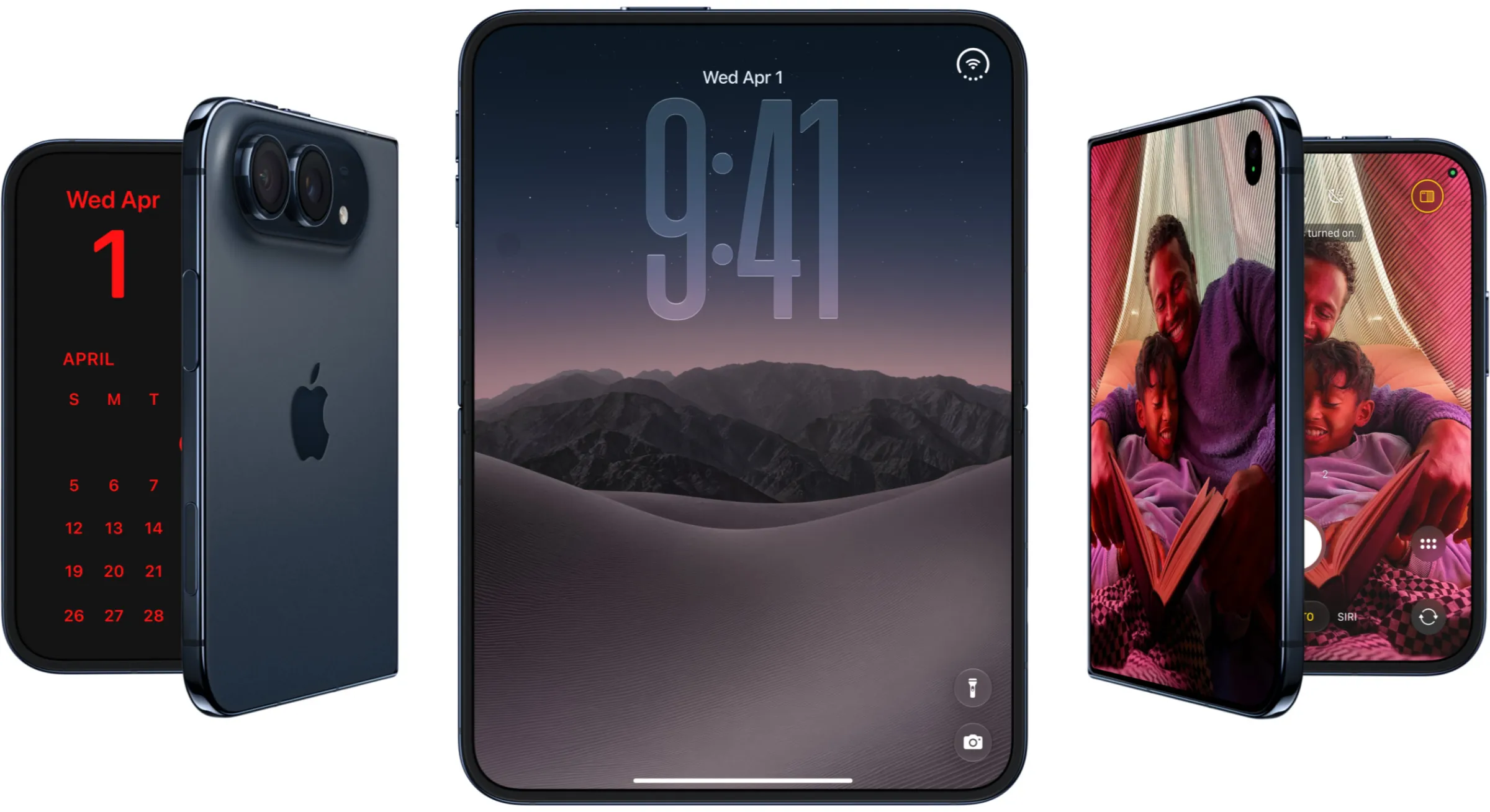
Unfolded, the iPhone Duo reveals a 7.6-inch display, and several hands-on reviewers at the launch event said they were struck by how flat the screen looked. (Image sourced from Apple's official website)

Both Displays Reach 3,000 Nits And Support 120Hz ProMotion

Beyond the crease, Apple also upgraded the iPhone Duo's display specifications more broadly. The new phone uses a wide-viewing-angle OLED panel, with both the inner and outer displays reaching a peak brightness of up to 3,000 nits and supporting an adaptive refresh rate of up to 120Hz through ProMotion, keeping the screen readable even under strong outdoor sunlight. The way the phone is operated has also changed to accommodate its folding design: Face ID has been replaced with Touch ID built into the side power button, and once the phone is unfolded to its larger display, the app dock shifts to the right side of the screen.

To save internal space and keep the device slim despite its folding structure, Apple says every global version of the iPhone Duo uses eSIM only, with no physical SIM card tray, a significant change for anyone used to swapping physical SIM cards directly. The phone will also support the USB-C Apple Pencil later this year, with the related features expected to roll out gradually. Between the display, the hinge and the way the interface itself works, the ground-up redesign shows that as Apple enters the foldable phone market for the first time, its first priority was tackling the exact pain points that have bothered foldable phone users for years.



​You've read it. Now join the conversation — follow us on X,  Facebook and IG. Editor: Yuping Chang​



Latest
Chinese Dramas' Top Emotional Moments: Is Your Favorite Actress on the List?
Taipei Security Dialogue | Expert Warns of Likely Limited Blockade Against Taiwan
From Military Threats to Legal Warfare: Inside Xi Jinping’s Four-Step Plan for Taiwan
Beijing Watch | From Shipping Heir To Beijing's Close Friend, Why Hong Kongers Feel Both Love And Hate For Tung Chee-hwa
Exclusive | Taiwan Drone Hub Chiayi Signs Poland MOU, Eyes Europe
Arasan furthers MIPI I3C® compliance with its participation at the I3C® interop in Taipei
MICROIP Secures Major US$20 Million Smart Residential Community Contract in Taiwan, Accelerating Edge AI Commercialization
Ensign InfoSecurity and TrendAI™ strengthen virtual patching against evolving AI-enabled attacks
Can Doing Good Create Business Value?
The Parisian Macao Celebrates 10th Anniversary
Is Beijing Doing Three Things To Take Taiwan? Chinese Think Tank Unveils Its Governance To Unification Framework
SJourney Enters a New Chapter with Arsenale's 33% Strategic Investment
Taipei Security Dialogue | Former US Defense Official Calls Taiwan's Drone Budget A Single Not A Home Run
ReThink HK 2026 Opens at HKCEC, Bringing Business, Government and NGOs Together to Accelerate Climate Action
SMU and LSE say universities and global academic culture should prioritise purpose and people
They're All Foldable Phones, So What Makes Apple's iPhone Duo Different
Taiyo Holdings Launches Next-generation Semiconductor-packaging Material "FPIM Series," Achieving Its First Three-layer RDL Formation with 700-nm CD on 12-inch Wafers
Could Japan Pass a Taiwan Relations Act? Kitamura And Seki Hei Visit Taiwan To Push For It
IShowSpeed Gets Told Taiwan's Singer Ashin Is From China, A Man In White Saves The Moment
Australian Think Tank Warns Chinese AI Surveillance Could Push Venezuela Into Digital Authoritarianism
Exclusive | Taiwan's Military Buys American Drones Then Discovers The Chargers Are Made In China
AIT's Raymond Greene Points To Israel As A Model For Taiwan's Shrinking Military Manpower
AFTER 2049 Confirms Headliners Claptone and Crusy for Singapore Grand Prix Weekend Kickoff
Beijing Watch | China's New Spy Drama Names Lee Teng-hui And Flies The Republic Of China Flag
Yutong Opens Its First Comprehensive Service Center in Europe
Dymax Launches BlueWave® FX Line Emitters to Boost Throughput in High-Speed Linear UV/Visible Curing
Taipei Security Dialogue | Huoh Warns Of An Axis Of Upheaval As China Eyes Sea Power
Cedars Digital Takes Singapore's AI-Driven Carbon Management Approach to Regional Smart City Dialogue