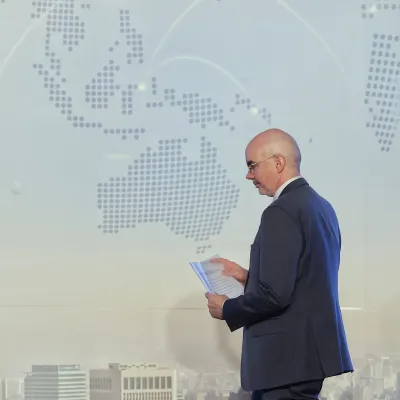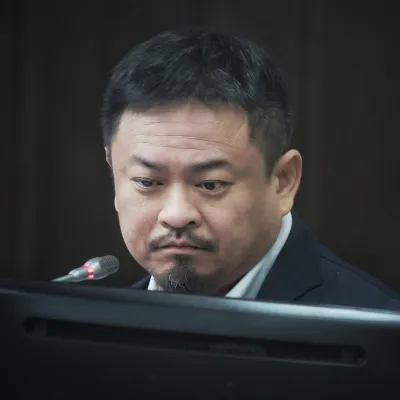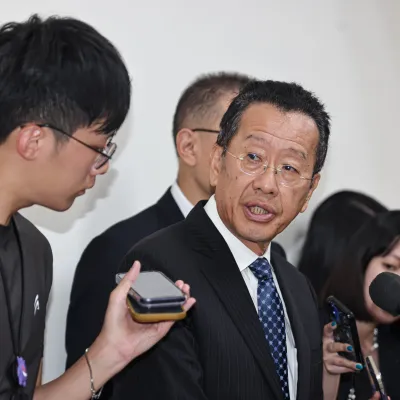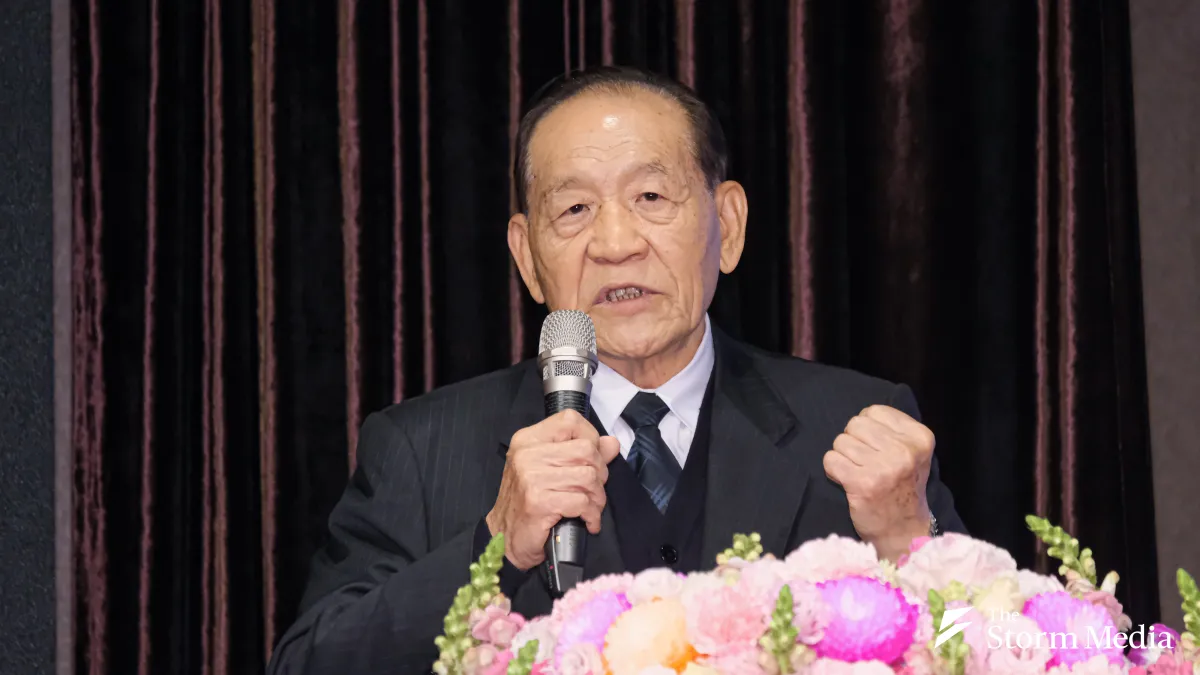
China's gray-zone coercion against Taiwan is not simply about wearing down the island's defenses, it is part of a broader push to shift the balance of power from land to sea, according to Shoou-Yeh Huoh, chairman of the Institute for National Defense and Security Research (INDSR). Speaking at the 2026 Taipei Security Dialogue, Huoh warned that an authoritarian "axis of upheaval" is testing the limits of the existing global order, and argued that peace is only preserved when a country is prepared to fight for it. He pointed to Taiwan's growing defense budget, now topping NT$1.15 trillion and exceeding 3 percent of GDP, as evidence that Taipei is taking that lesson seriously.
Ukraine And The Middle East Show Why Taiwan Cannot Afford To Be Naive
Huoh opened his remarks by drawing on the ongoing war in Ukraine and recent conflicts in the Middle East, including instability around the Strait of Hormuz, to argue that Taiwan cannot afford naive assumptions about its own security. Wars that seem far away, he said, carry direct lessons for any democracy sitting next to an authoritarian power with territorial ambitions. His central message was blunt: the only way to keep the peace is to be visibly ready for war. Governments that let their guard down, he argued, invite exactly the kind of coercion they hope to avoid.
Breaking China's Push From Land Power To Sea Power
Turning to the region, Huoh said Beijing's steady drumbeat of gray-zone activity around Taiwan, from incursions by coast guard vessels to military aircraft probing the island's air defense identification zone, is not random harassment. It reflects a deliberate strategy to convert China's dominance as a land power into dominance as a sea power, extending its reach across the first island chain and beyond. He described this as part of a wider "axis of upheaval" among authoritarian states working to unsettle the rules-based order that has underpinned global trade and security for decades.
Huoh argued that countering this pressure requires "integrated deterrence," combining Taiwan's own defenses with coordination among like-minded partners, precisely because the island sits at a global maritime chokepoint. If a crisis erupts in the Taiwan Strait, he said, the shockwaves would not stay contained to the region. "If the Taiwan Strait has a crisis, the whole world has a crisis," he told the audience, framing Taiwan's security as a stake for the entire international trading system rather than a purely local dispute.
Defense Budget Tops NT$1.15 Trillion As Taiwan Builds Societal Resilience
Huoh also used his remarks to highlight the scale of Taiwan's own response. Next year's defense budget is set to surpass NT$1.15 trillion, pushing defense spending above 3 percent of GDP for the first time in years. Beyond hardware and troop numbers, he pointed to a parallel effort to build what officials call "whole-of-society defense resilience," weaving together national defense, civil defense and psychological defense into a single framework rather than treating them as separate tracks.
As an example, he cited recent municipal-level urban resilience and air defense drills held around Taiwan, which are designed to prepare ordinary citizens and local governments, not just the military, to respond in a crisis. Huoh framed this buildup as the practical expression of "peace through strength," arguing that a society capable of absorbing and recovering from a shock is itself a deterrent. He noted that this year's Taipei Security Dialogue agenda reflects the same priorities, covering lessons from Ukraine and the Middle East, the strategic stakes around the Strait of Hormuz and the Taiwan Strait, innovation in unmanned systems, and ways to build resilience against gray-zone pressure. (Related: Exclusive | Taiwan Builds a Smarter Reserve Force, One Brigade at a Time | Latest )