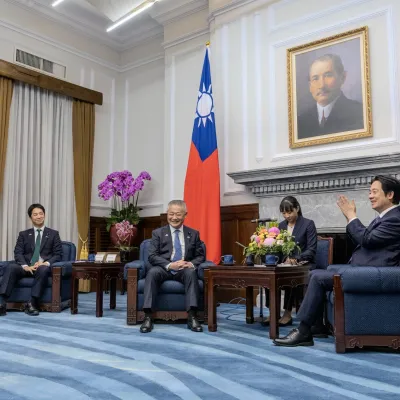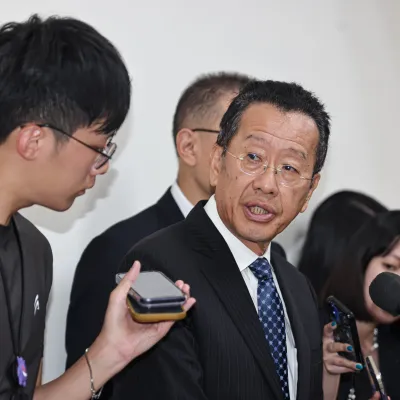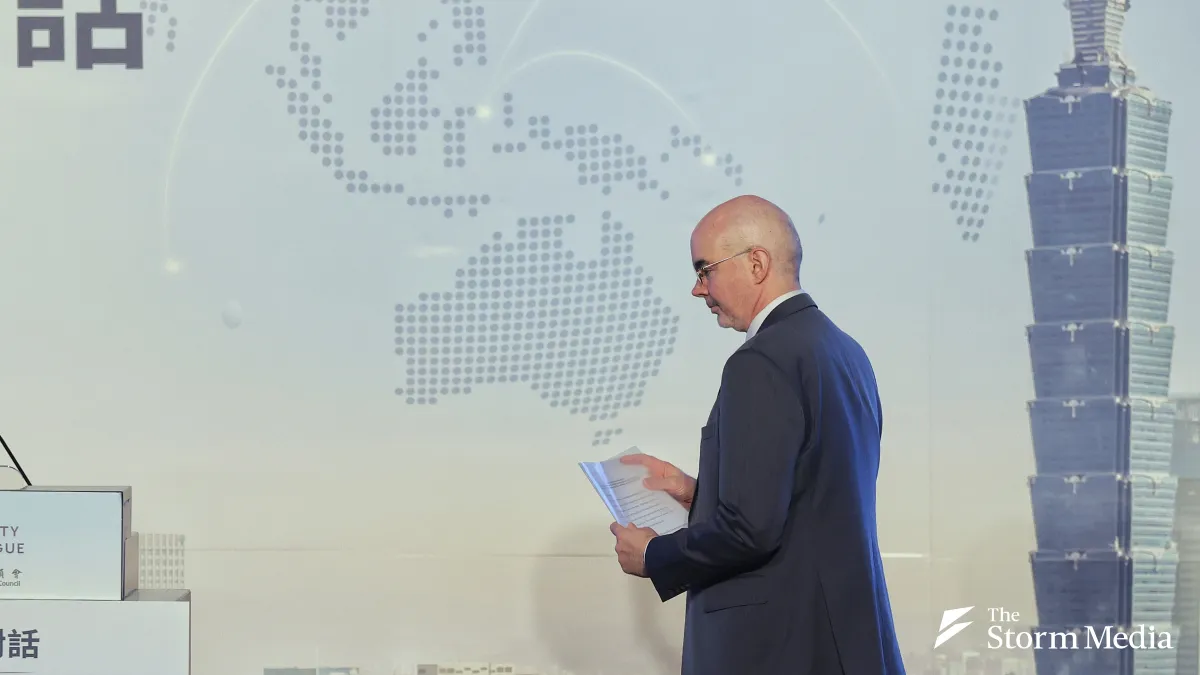
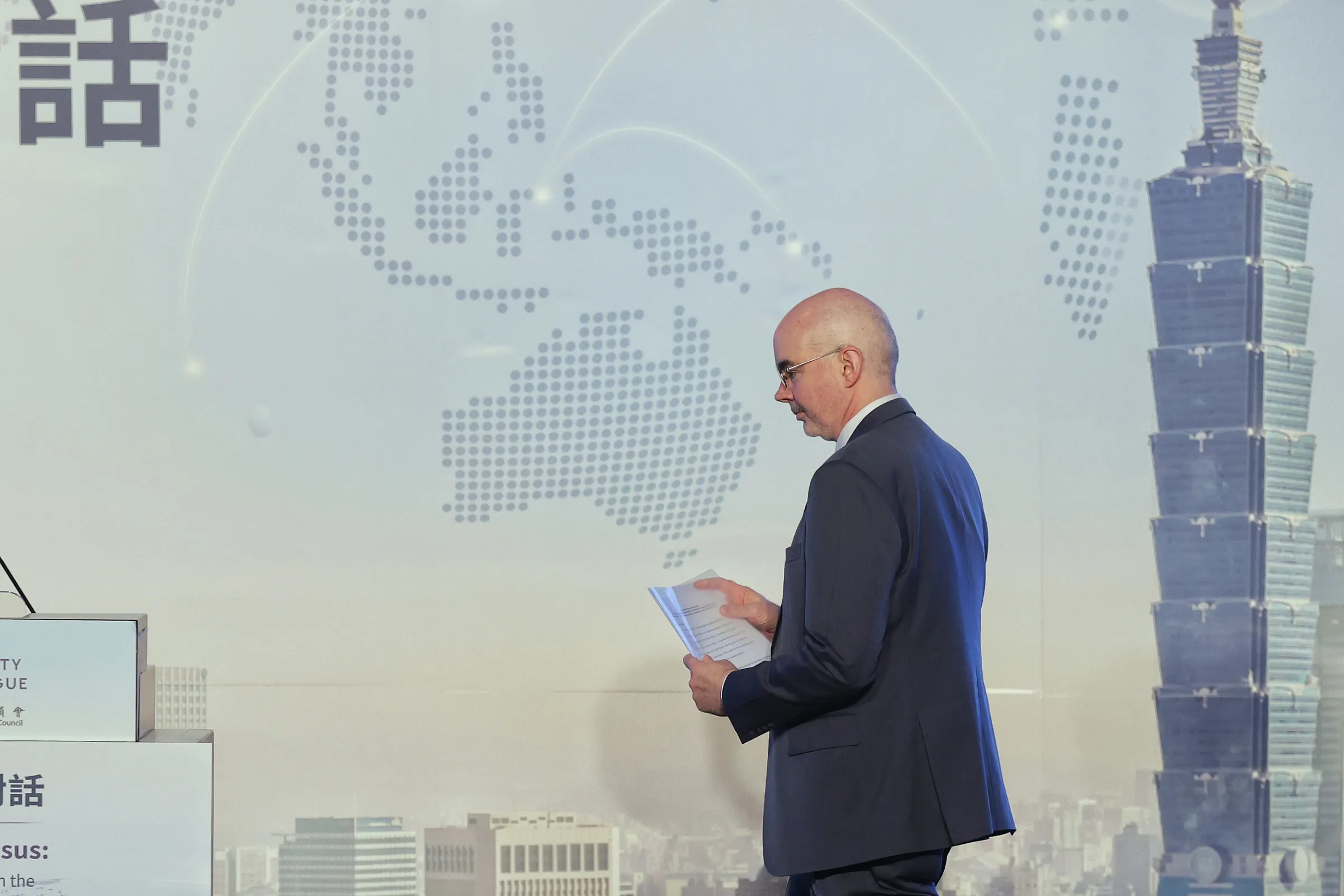
Speaking at the 2026 Taipei Security Dialogue on September 9, American Institute in Taiwan Director Raymond Greene told attendees that recent conflicts around the world show the arrival of a new era of warfare defined by asymmetric combat, one in which innovation and the ability to adapt quickly bring decisive advantages. Greene said Taiwan can draw on three unique asymmetric strengths of its own to deter conflict: unmanned systems, mission command, and societal resilience, alongside two enabling factors essential to making them work, investment and the effective use of reserve forces. Facing what he called unprecedented threats, Greene said preserving peace today requires a substantial increase in defense spending.
Unmanned Systems Are Rewriting The Rules Of Modern Warfare
Greene said unmanned systems occupy the same place in today's wars that machine guns held in World War I and tanks held in World War II, technology capable of rewriting the rules of the battlefield and redefining warfare itself. He pointed to Ukraine, which weakened Russia's powerful Black Sea Fleet and thwarted a planned amphibious assault on Odesa without a formal navy of its own, and which has more recently broken through some of the world's most advanced air defense systems to strike strategic targets deep inside Russian territory.
Ukraine, Greene noted, built a world class defense technology industry from almost nothing in the middle of war, starting from a technological base that amounts to only a fraction of what Taiwan already possesses. Taiwan, by contrast, starts from an extremely strong foundation, including advanced manufacturing capability, deep semiconductor expertise, and access to combat proven American autonomous systems such as Anduril's Altius series and Shield AI's V-BAT.
Just as important, Greene said, leading American drone companies are building deep production, research and supply chain partnerships with Taiwanese firms of every size. Taiwan's drone exports are growing rapidly, and its manufacturers are breaking into demanding international markets. The United States and Taiwan are also pushing the boundaries of cooperation in unmanned surface vessels, unmanned underwater vehicles and AI enabled swarm technology. The real formula for victory, he said, lies in systems integration, blending traditional manned platforms with unmanned systems and survivable, multi domain C4ISR capable of operating under complex kinetic and electromagnetic threats, exactly what has been seen in Ukraine. As ongoing conflicts show, the modern battlefield is highly transparent and changes rapidly, a reality that challenges not only technology and equipment but the people who operate them.
Mission Command Lets Taiwan Trust Its Own Soldiers
One of Ukraine's most important advantages from early in the war, Greene said, has been its ability to practice mission command, pushing combat decision making down to the tactical level. Soldiers granted the authority to make their own decisions at the point of contact have repeatedly outmaneuvered Russian forces still bound by a rigid, top down command structure.
Greene said one reason Ukraine has been able to use mission command effectively while Russia has not comes down to an asymmetric advantage shared by democracies like Ukraine and Taiwan: neither has to worry about whether its own military is loyal to the state. That trust is not merely emotional, he said, it can be operationally decisive. In high intensity combat where communications are suppressed or cut off entirely, the side able to act without waiting for approval from the top enjoys a clear edge. Rigid command structures are not easily fixed, Greene acknowledged, but Taiwan's most recent Han Kuang exercise showed the military rapidly adapting the concept of mission command to give its forces greater operational flexibility.
Societal Resilience Turns Taiwan's Open System Into A Strength
Greene said authoritarian powers like Russia treat open societies as an exploitable weakness, whether through media manipulation and election interference designed to sow division and erode public support for defense spending, or through direct attacks on civilians and economic infrastructure during conflict. That reality, he said, underscores the urgent need for democracies to build societal resilience.
Taiwan's public and private sectors did not wait for a crisis to begin preparing, Greene said. Over the past two years he has observed numerous urban resilience exercises and has been consistently impressed by the improving coordination between central and local government, as well as between civil institutions and Taiwan's military. Taiwan's strong tradition of volunteerism and community mutual aid, he added, forms an important foundation for that resilience.
Taiwan has also systematically addressed its own economic vulnerabilities, particularly in energy, Greene said. International attention has focused on Taiwan's efforts to expand liquefied natural gas transport and storage capacity, but many overlook the broader progress Taiwan has made on overall energy resilience, from rationing plans and a more distributed power grid to the use of coal and renewables and research into new or repurposed sources such as nuclear and geothermal power. Taiwan's energy resilience today, he said, is far stronger than it was just a few years ago, and the island's ability to weather the impact of the Middle East conflict on energy supplies and key imports is itself evidence of that progress.
On the information front, Greene said Taiwan faces a daily barrage of hostile propaganda aimed at sowing division and eroding public confidence in democratic institutions and in Taiwan's international partnerships, including trust in the United States. Taiwan has become something of a global model for countering this kind of media manipulation, he said, but must still prepare for a more complex next wave of threats, particularly as upcoming elections approach and information warfare increasingly incorporates the latest advances in artificial intelligence. AI driven cyber threats could also pose major challenges to sectors such as banking and critical infrastructure, making immediate action essential.
Defense Investment And A Stronger Industrial Base Are Essential
Greene reiterated that the world faces unprecedented threats today, and preserving peace requires substantially higher defense budgets. With American encouragement, he said, Europe is moving forward and gradually shedding decades of underinvestment in defense, while Australia, Japan and South Korea are taking similar steps.
Taiwan, Greene said, continues to demonstrate what sustained, long term investment in self defense can achieve once conflict breaks out, and the Lai administration is taking the same approach, including a commitment to raise defense spending to 5 percent of GDP by 2030, a choice he said Taiwan is in a stronger position to make than many of its partners. Buying more weapons and equipment is necessary but not sufficient, he added. Restoring and replenishing combat capability during wartime matters just as much, which is why investment in the defense industrial base is essential. Such investment delivers both economic and security benefits, and Taiwan has enough technological and manufacturing capacity not only to meet its own needs but to help build more secure and reliable supply chains among democracies worldwide.
Greene pushed back on the argument that investing in the defense industry risks fueling corruption, calling it a distraction from the real issue. In fact, he said, democracies with a free press, legislative oversight and internal watchdog mechanisms are better positioned to limit corruption, itself another asymmetric advantage democracies hold over authoritarian states. Without transparency, he said, authoritarian governments cannot even be sure their equipment will function properly until it is tested in actual combat. Taiwan's complex, vibrant democracy is an important safeguard against that fate, which is part of why Taiwan's standing in international corruption rankings keeps improving. According to the latest Transparency International survey, Taiwan now ranks in the top 15 percent of countries worldwide.
Reserve Forces And An Untapped Pool Of Manpower
Greene addressed another common but flawed argument against higher defense spending, the claim that Taiwan lacks enough military manpower to operate the equipment it is buying. Taipei, he said, is already answering that question through more effective use of its reserve forces. Since extending mandatory military service from four months to one year starting in 2024, the size and readiness of Taiwan's army has begun to change. Under the reformed one year training system, more than 30,000 more thoroughly trained conscripts will enter the force structure next year alone, equipped with modern gear.
If Taiwan continues deepening these policy reforms, Greene said, it can build the force size and expertise it needs even while facing ongoing demographic pressure. Taiwan has a genuine opportunity to apply the same logic to its population structure, turning a smaller population into a deeper, better trained force capable of mobilizing quickly. To fully realize that benefit, he said, Taiwan should keep extending the length of annual reservist training call ups and ensure reservist skills match the military's actual needs. Taiwan's female population also represents a substantial but still underused manpower resource, offering a real potential advantage. Taiwan's rate of female enlistment already exceeds Japan's and South Korea's and is comparable to the United States, another clear sign that Taiwan's military is building meaningful depth and resilience.
Taiwan's Defense Posture Has Transformed Since 2022
Since Russia's full scale invasion of Ukraine and the unprecedented provocations Taiwan faced across the strait later that same year, Greene said, Taipei has moved decisively to strengthen its own defenses. That progress was on full display during the most recent Han Kuang exercise, with Patriot missile units and armored brigades maneuvering through city streets, a scenario that would have been almost unimaginable just a few years ago.
This is not a small, incremental shift, Greene said, but a fundamental change in how seriously Taiwan takes its own defense, and one that deserves genuine recognition. At the same time, he said, neither the United States nor Taiwan can afford to rest on past successes. Both sides continue to draw new and often difficult lessons from the battlefields of Ukraine and the Middle East, and incorporating those lessons into how Taiwan prepares for and would fight a war is what will ultimately ensure those lessons never have to be applied in an actual conflict.
Greene closed by emphasizing that this is the goal being pursued in Taiwan and around the world, not victory in conflict, but the prevention of conflict altogether. With the kind of collective effort on display at the dialogue, he said, that future remains well within reach.