Tung Chee-hwa (董建華), the first Chief Executive of the Hong Kong Special Administrative Region, died on September 8 at the age of 89. As one of the defining figures of Hong Kong's modern political history, Tung governed through eight turbulent years that included the Asian financial crisis and the SARS epidemic, and his push for national security legislation under Article 23 of the Basic Law left a lasting imprint on the territory's political landscape that is still felt today.
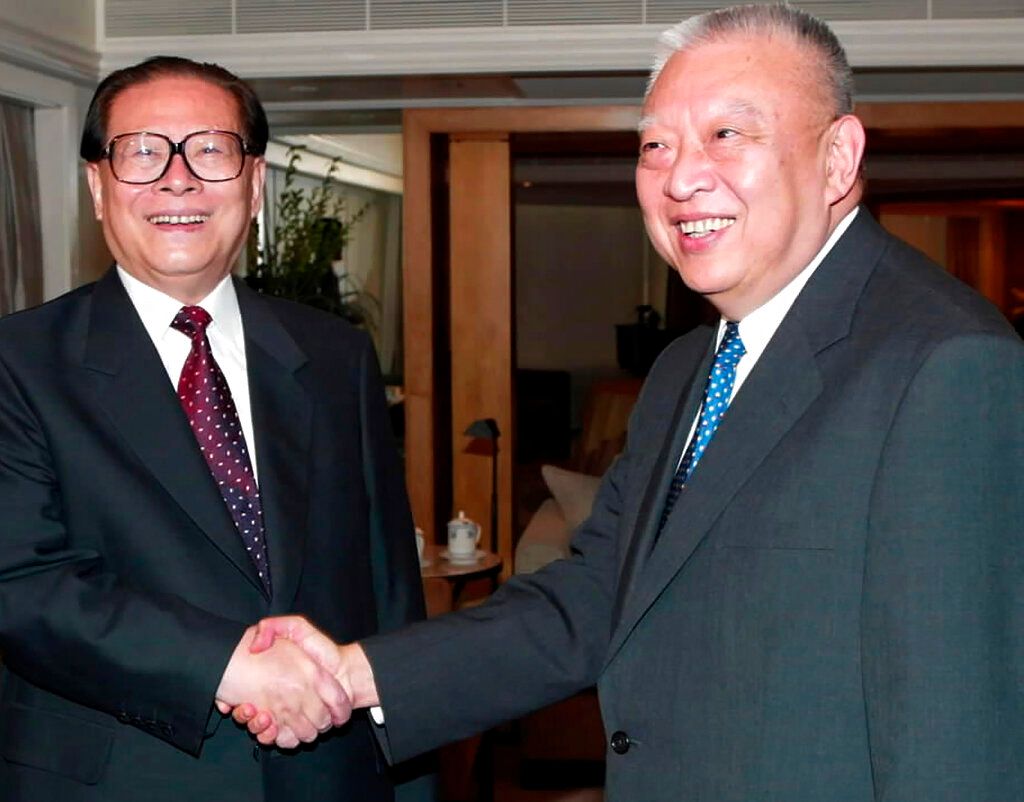
A Shipping Tycoon Who Took The Helm At A Delicate Moment
Before entering politics, Tung chaired Orient Overseas Container Line, one of Hong Kong's best known shipping conglomerates. He was chosen in 1997 as the first Chief Executive of the newly established Hong Kong Special Administrative Region, taking office at an especially sensitive juncture as the territory transitioned from British colonial rule to Chinese sovereignty under the "one country, two systems" framework.
Financial Crisis And SARS Battered His Early Years In Office
Tung's administration was tested almost immediately. The Asian financial crisis dealt a devastating blow to Hong Kong's economy shortly after he took office, and the SARS outbreak in 2003 pushed the territory into a deep slump just as it appeared to be recovering.
Analysts have said Tung's economic policy centered largely on expanding infrastructure and pushing for industrial transformation, but with the broader economy struggling, public frustration over housing policy and unemployment built steadily and became one of the defining pressures of the later years of his tenure.
Article 23 Triggered Hong Kong's Largest Protest In Decades
The most consequential turning point of Tung's time in office came in 2003, when his government pushed forward legislation under Article 23 of the Basic Law, Hong Kong's mini constitution, which would have introduced new national security offenses. The proposal met broad public opposition and culminated in a march on July 1 that drew an estimated 500,000 people, one of the largest demonstrations in the territory's history.
The protest is widely regarded as a watershed moment for Hong Kong's civil society, reflecting a sharp rise in public engagement with political affairs and posing one of the most serious tests to date of how the "one country, two systems" model of governance would function in practice.
He Resigned Early Citing Health And Moved To Beijing's Legislature
In 2005, Tung stepped down as Chief Executive citing health reasons, cutting his term short. He later took up a position within China's National People's Congress, a role he held in the years that followed his departure from Hong Kong's top office. (Related: Beijing Watch | As Joshua Wong Pleads Guilty Again And Faces Life In Prison, Is This The End Of Hong Kong's Democracy Movement? | Latest )