For the first time in three decades, Japan's long-term interest rate touched 3%. What followed was a rush to mortgage consultation windows across the country, a reshuffling in equity markets, and a fundamental rethinking among corporate finance executives of which investments are even worth making.
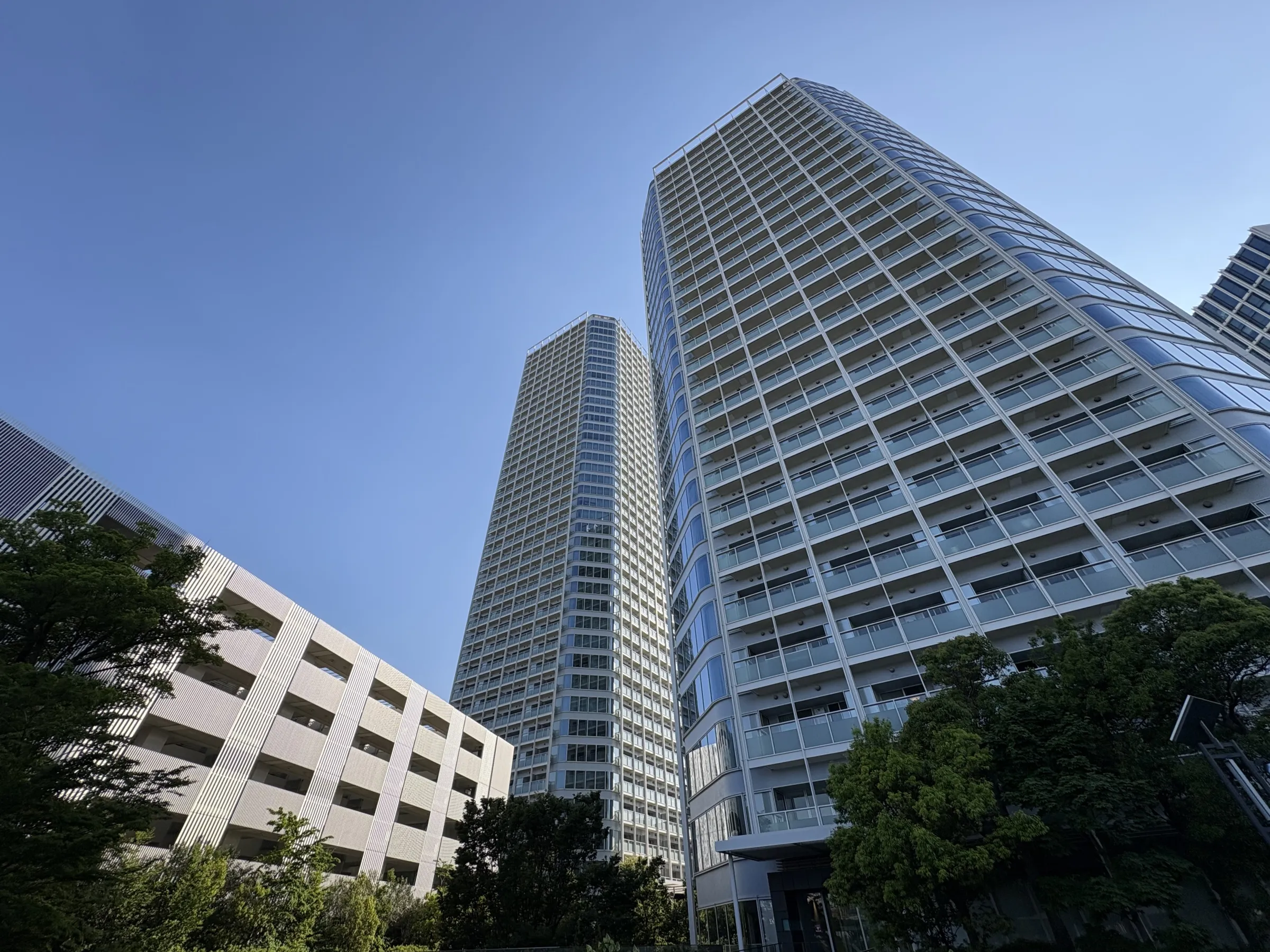
Mortgage Inquiries Flood In After Japan's 30 Year Rate Milestone
When Japan's 10-year government bond yield briefly touched 3% on September 1 for the first time since the early 1990s, the immediate ripple hit ordinary homebuyers. ANN reported that mortgage consultation volumes over the preceding weekend were roughly double the usual level, as borrowers scrambled to determine whether to lock in a fixed rate or stay with variable-rate loans.
Japan's mortgage market offers three main structures: fully variable, fixed for an initial period, and fully fixed for the entire loan term. The representative product for the latter is Flat 35, administered by the Japan Housing Finance Agency. As of September 2026, the most common rate for a 21 to 35 year Flat 35 loan has reached 3.46%, while the 15 to 20 year bracket stands at 3.14% and the longest 36 to 50 year term sits at 3.70%.
Fixed Versus Variable: No Longer Just About Who Pays Less
For much of the past two decades, Japanese borrowers defaulted to variable-rate mortgages not because the choice was close, but because variable rates were substantially cheaper and few believed the Bank of Japan would ever tighten meaningfully. That logic has begun to erode.
A calculation shared by ANN shows the current spread between variable and fixed rates at roughly 2.2 percentage points. Closing that gap would require approximately nine rate hikes of 0.25 percentage points each. So in raw cost terms, variable still wins today. What has changed is the confidence that it will keep winning. That uncertainty is precisely what drove the surge in consultations.
A Mainichi Shimbun online poll on Yahoo captured the shift in public sentiment: 39.2% of respondents said they would choose a fixed rate for the payment certainty it offers, while 34.9% said they would still go variable for the lower rate. The country is almost evenly split.
Savers Finally Earn A Return After Decades Of Near Zero Rates
The same rate environment that punishes borrowers rewards savers, and financial planners Maekawa Mitsugi and Takahashi Tadahiro noted as much to the Nikkei. For years, deposits in Japanese banks carried an effective yield of essentially zero, driving many Japanese investors to park money in overseas equities in search of returns.
Individual government bonds issued in September 2026 now offer meaningfully positive rates: the variable 10-year bond carries a first-period yield of 1.95%, while the fixed 5-year version yields 2.24%. These numbers still trail the market yield on 10-year government bonds, but they represent levels not seen in Japan for over two decades.
Corporations Must Recalculate Which Investments Are Worth Pursuing
The structural shift runs deepest at the corporate level. Companies across Japan are actively migrating their borrowing from variable to fixed-rate instruments and extending loan maturities, a move described by Resonac Holdings CFO Someya Hideki as a direct response to rising borrowing costs — essentially locking in today's rates before they go higher.
But the more consequential change is in investment decision-making itself. IHI Managing Executive Officer Oshima Hiromi told the Nikkei that there are almost no executives left within the company who have experience running a business in an environment with meaningful interest rates. The firm's board has recently been discussing what rate levels to plan for when existing loans roll over.
The mechanism at work is the weighted average cost of capital, or WACC. When funding is cheap, a company might accept a project expected to return 3% if its cost of capital is 2%. The same project becomes unviable if rising rates push WACC above 3%. The Nikkei cited this as the return of one of interest rates' most fundamental functions: forcing governments and companies to discriminate between what is worth doing and what is not — a filtering mechanism Japan went without for 30 years.
Bank lending benchmarks reflect how far borrowing costs have already risen. According to Bank of Japan data, the long-term prime rate charged to corporate borrowers rose from 1.10% in February 2022 to 3.25% in August 2026, an increase of 2.15 percentage points over four years. Large corporations with strong credit can still access bond markets directly or negotiate favorable terms; smaller companies, more dependent on bank financing and with less bargaining power, face a more constrained menu of options.
Why AI Stocks Suffered More Than Utilities When Rates Rose
When the 10-year yield touched 3% on September 1, the Nikkei 225 index closed lower, but 170 of its 225 components actually rose. The decliners were concentrated among artificial intelligence and semiconductor companies, while electric and gas utilities led the gains.
The logic mirrors the investment calculus described above. AI and semiconductor stocks are priced largely on future earnings expectations, and rising rates reduce the present value of those distant profits. Cash placed in interest-bearing instruments now earns a real return, competing directly with the promise of future tech earnings. Utilities, which deliver stable current dividends, become relatively more attractive under those conditions.
The relationship proved symmetric. On September 4, after the 10-year yield retreated below 2.9%, the Nikkei rebounded 806.46 points. By September 7, the index had climbed a further 1,378.90 points to close at 66,399.84, with AI and semiconductor shares leading the recovery. The stocks that get hit hardest when rates rise also bounce most sharply when rates fall.
Nomura Securities chief equity strategist Kitaoka Tomoya noted that the most common question he receives from foreign investors is at what rate level the stock market would come under sustained pressure. The consensus figure circulating in the market, he said, is around 4%.
All Eyes On The BOJ September Meeting
The 3% threshold proved short-lived. By September 4, the 10-year yield had retreated below 2.9%, driven by yen strengthening that eased inflation concerns and a pullback in U.S. long-term rates. The landmark level held for only two intraday sessions.
The direction, however, has not reversed. BOJ Governor Kazuo Ueda confirmed that the September policy meeting will include discussion of potential rate hikes. Deputy Governor Himino Ryozo had warned on August 27 of the need to remain alert to inflation overshooting. Board member Takata Hajime went further on September 2, arguing that rate hikes should not be locked into a twice-yearly schedule but evaluated at each meeting on its own merits.
The BOJ policy meeting on September 17 and 18 will shape expectations for variable mortgage rates and short-term corporate borrowing, though any change in the policy rate would still need to be transmitted through the banking system before reaching individual borrowers. Fixed mortgage rates, pegged to market long-term yields rather than BOJ decisions, will continue to move independently.
For a generation of Japanese borrowers, businesses, and investors who operated entirely within an era of near-zero rates, the rules have changed. Questions that never required an answer for 30 years now need one every year.