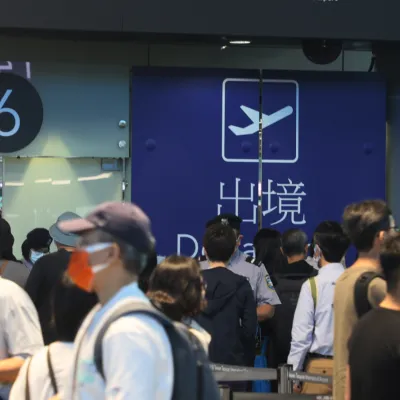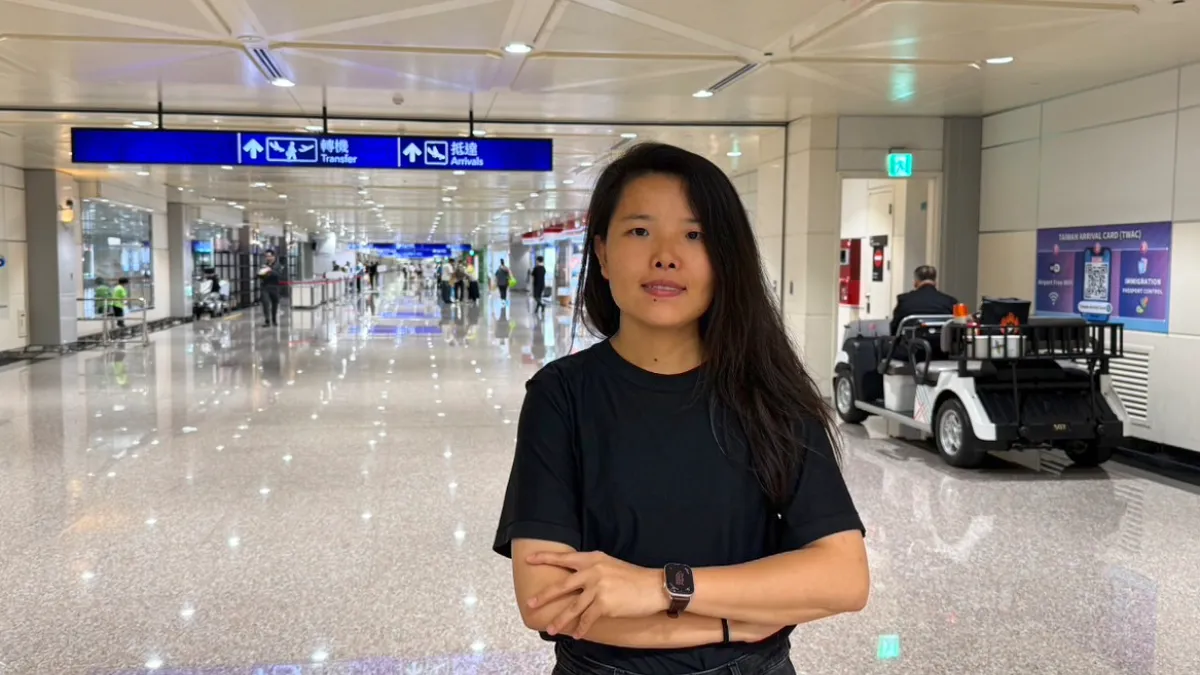
Human rights lawyer Wang Xiahong (王夏紅), known abroad as Ruth Wang, landed at Taiwan's Taoyuan International Airport this week with her husband and two young children on what was supposed to be a layover on a flight from Japan to Singapore. Instead, once the family reached Taiwanese soil, they changed course, asking Taiwan for help and hoping to find a path onward to the United States, Canada or another third country.
Taiwan's Mainland Affairs Council responded quickly, agreeing to let the family stay temporarily on humanitarian grounds. But the council was equally quick to set expectations, stating that given the unique political and security dynamics across the Taiwan Strait, Taiwan cannot process cases from mainland China under its general political asylum framework. Taiwan has no dedicated asylum law, the council said, but does have existing mechanisms it can apply to the case.
Representing A Banned Church Made Her A Target
Wang is a partner at Beijing's Kaimen Law Firm, and since October of last year she has represented people connected to Zion Church, an unregistered house church founded in 2007 by Ezra Jin. Congregations like Zion Church sit outside China's officially sanctioned religious system and have long faced government scrutiny and restrictions. A sweeping raid on the church swept up 18 people, including Jin himself, in what is widely seen as one of the largest crackdowns on a single underground congregation in China in decades. Jin was later released, and U.S. President Trump reportedly raised the case directly with Xi Jinping, but pressure on the lawyers who defended the church's members never let up.

Wang has told media that Chinese authorities recently pressed her and her colleagues to dissolve their law firm voluntarily, warning it could otherwise be shut down by force. Her mentor and the firm's founder, Zhang Kai, has already had his law license revoked and is barred from leaving China. Other lawyers at the firm have been suspended, and even those who tried to move to different firms say they have run into similar roadblocks.
From Defending Others To Becoming The One Under Scrutiny
Wang is not the kind of dissident who vanishes suddenly or slips across a border in secret. She was summoned by Chinese authorities simply for having taken on what officials consider a sensitive case, a pattern closely tied to a recently revised Lawyers Law passed by China's National People's Congress that pushes attorneys toward closer political alignment with the ruling party.
It is a familiar pattern among Chinese lawyers now: some post about their loyalty to the party on WeChat around party-building anniversaries, and those invited to train at the Communist Party's Central Party School in Beijing's Haidian district often make a point of showing it off. Taken together, these habits point to an unmistakable expectation that lawyers demonstrate political alignment as part of everyday practice.
In an environment where politics and the judiciary are so tightly intertwined, defending someone the government has already marked as a problem can turn a lawyer into an extension of that same pressure. Bob Fu, founder of the U.S.-based advocacy group ChinaAid, has said Wang's case illustrates the mounting strain on lawyers who take on legal work for persecuted Christians and other prisoners of conscience.
An inquiry placed to Beijing's municipal justice bureau after news of the case broke drew a claim of no knowledge of the matter from the staff member who answered, who suggested contacting the bureau's lawyer affairs division instead. A follow-up call to that division went unanswered at first, with the staff member apparently needing to check with a supervisor before responding, and the call itself was recorded on the other end.
Why Taiwan Without A Refugee Law Struggles To Help

Wang's case is not the first of its kind. In 2024, a Chinese national transiting through Taoyuan Airport on a flight originating in Kuala Lumpur requested asylum after landing, but was ultimately sent back to the prior stop because she lacked a valid visa or entry permit for Taiwan. That same August, a Chinese woman, Deng Liting, and her family made a similar move during a layover at Taoyuan, saying they were fleeing persecution by Chinese authorities; they were eventually resettled in a safe third country.
Some who attempt this route are resettled abroad, and others are turned back to where they came from, with successful outcomes often hinging on whether a democratic third country is willing to take them in rather than on any guarantee from Taiwan itself. Taiwan has no refugee law and no complete system for determining refugee status or providing long-term shelter. The narrow provisions in its Immigration Act and cross-strait regulations covering "special contributions" or "persecution" are tightly limited and heavily shaped by politics.
A Narrow Path Toward A Third Country
Taiwan's preferred approach, handling each case individually, granting a temporary stay, and helping arrange onward travel, is neither indifferent nor a full commitment. That gives Wang's family some breathing room for now, even as their longer-term future remains uncertain. Wang has said she may try to reach the United States or Canada through a student visa route, and would consider applying for asylum directly if that path does not work out. The American Institute in Taiwan has not commented publicly on the case.