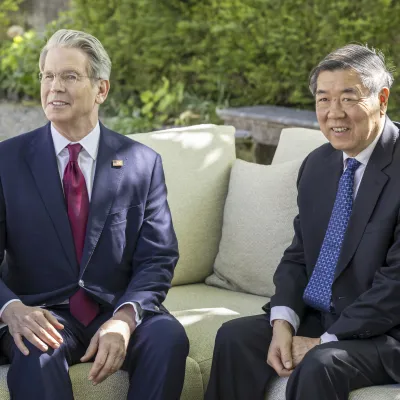
Germany's Merck KGaA will relocate its global thin film technologies executive from California to Taiwan next month, the company announced at SEMICON Taiwan 2026 on September 3, in the most visible sign yet of the materials giant's bet that Asia is where chip battles will be won.
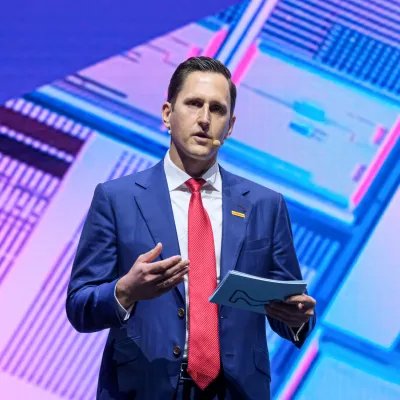
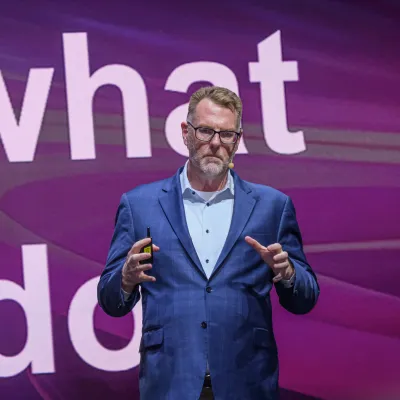
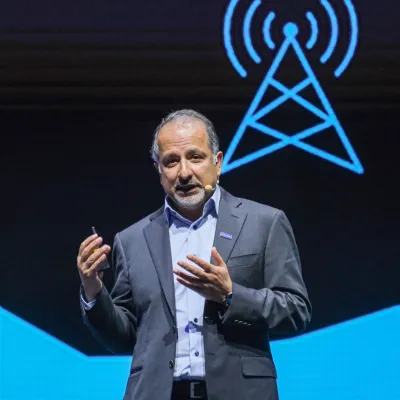
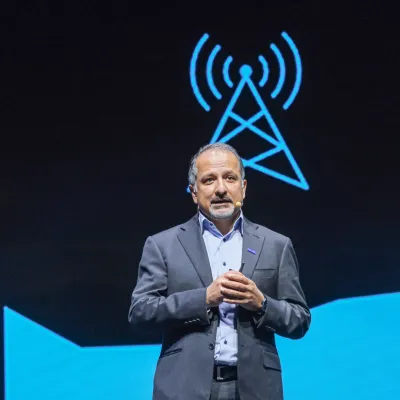
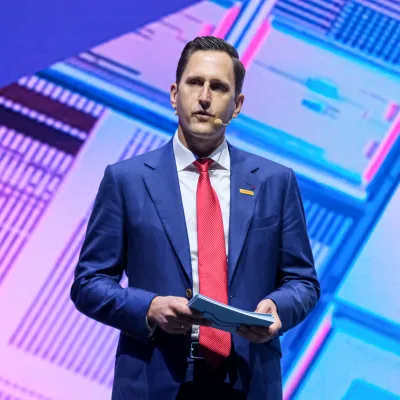
Bing Han, executive vice president of Merck's global thin film business, said he has made more than 50 trips to Taiwan over his career and will formally make the island his base of operations. Ben Hein, who became chief executive of Merck's Electronics division on May 1, said the decision was strategic, not incidental. "If you have the person responsible for major decisions close to the customer—and that person can speak the customer's language—it benefits the overall collaboration enormously," Hein said.
Three Pillars Behind Merck's Organizational Reset
Hein outlined three principles driving the overhaul. The first is radical customer centricity: chipmakers at the leading edge are too few and too demanding for a materials supplier to wait for specifications before acting. Merck must co-develop solutions inside the process, not simply ship products once a spec arrives.
The second is speed. Semiconductors run on their own clock, Hein said, and suppliers who cannot rapidly convert customer needs into deployable materials, equipment, and process solutions risk being left behind. The third is internal collaboration: Merck has built a wide portfolio—thin film materials, specialty gases, patterning, planarization, material delivery, and measurement and inspection—but those capabilities lose value when siloed across separate business units.
"Our most sophisticated customers care about yield and time to market," Hein said. "As chip architectures become more complex, a supplier's ability to integrate different technologies quickly will directly affect qualification timelines and production ramp."
Flatter Hierarchy to Cut Internal Meetings, Speed Up Decisions
To accelerate decisions, Merck is stripping management layers out of its Electronics division. Hein was direct: more management tiers mean more internal meetings, and the company needs that time spent with customers instead. He described the restructured team as a "five-star team" capable of executing the company's strategy, while acknowledging that a company of Merck's scale must pace change against what the organization can absorb.
Hein was equally clear that cutting layers does not mean cutting investment. Merck will continue building out technical development and external partnerships, and will station more decision-capable personnel near major customers and wafer-fabrication clusters. "You can expect our innovation and R&D investment in Taiwan will only increase, not decrease," he said.
James Lee Bridges Merck's Business Units for Key Clients
Alongside Han's relocation, Merck restructured how it serves its largest semiconductor clients. James Lee, who already chairs Merck's Taiwan operations, assumed a new global role on July 1 as senior vice president of global strategic customer management and business excellence.
Lee said that top-tier chip customers typically work across multiple Merck product lines simultaneously—thin films, specialty gases, patterning, planarization, material delivery, and metrology. Under the previous model, the same customer could face different account managers, quality benchmarks, and contract structures depending on which Merck unit was involved. His team will now act as a single integrator for Merck's most complex accounts, so clients no longer need to navigate Merck's internal structure themselves.
"Clients won't accept different quality standards from the same company just because different business units are involved," Hein said. "Large customers don't want multiple contracts for different products. We need unified quality, simplified contracts, and a single service window."
Taiwan Evolves From Supplier Base to R&D and Strategy Hub
Merck recently completed a €500 million investment in Taiwan to expand on-island production capacity for thin film materials, specialty gases, and formulated materials. The executive moves announced at SEMICON Taiwan 2026, however, go further: they signal a deliberate push to embed research, technical decision-making, and strategic customer management into Taiwan itself—not merely its factories.
With Han arriving next month and Lee now overseeing global strategic accounts, Merck is compressing the gap between materials science, customer demand, and corporate strategy, placing them as close as possible to where advanced semiconductor processes are actually made. As innovation cycles in advanced chips keep accelerating, how quickly a materials supplier can close that decision loop may itself become a decisive competitive edge.
In Full
SEMICON Taiwan 2026 | Merck Shifts Its Chip Talent East, Bets Big on Taiwan R&D
Original Article In Chinese
(Related:
SEMICON Taiwan 2026 | Merck's Chip Business Now Commands 80% of Its €3.5B Electronics Revenue
|
Latest
)