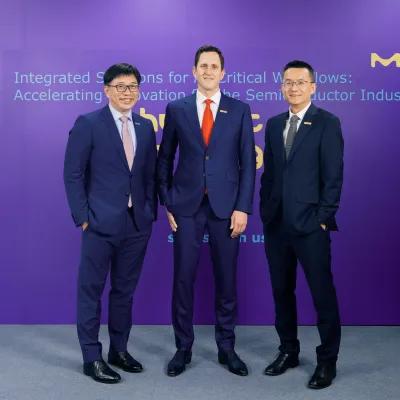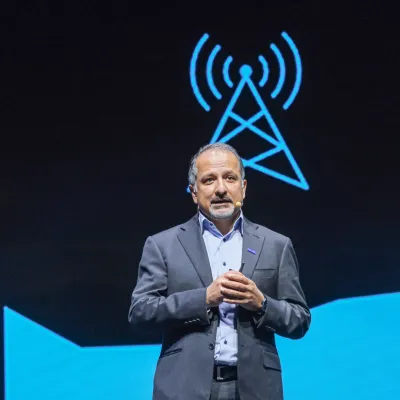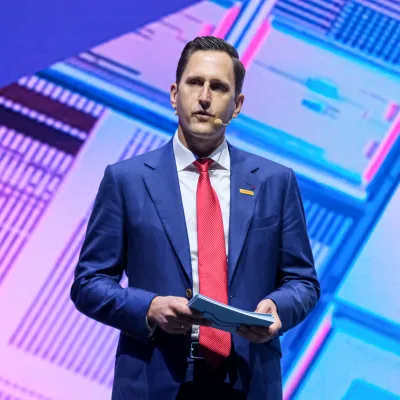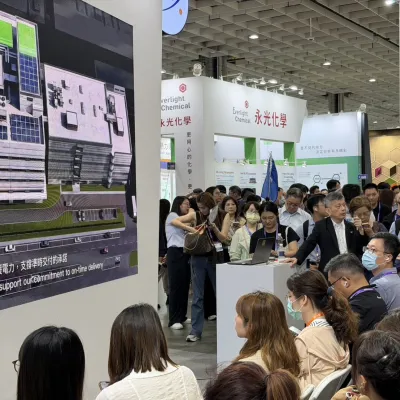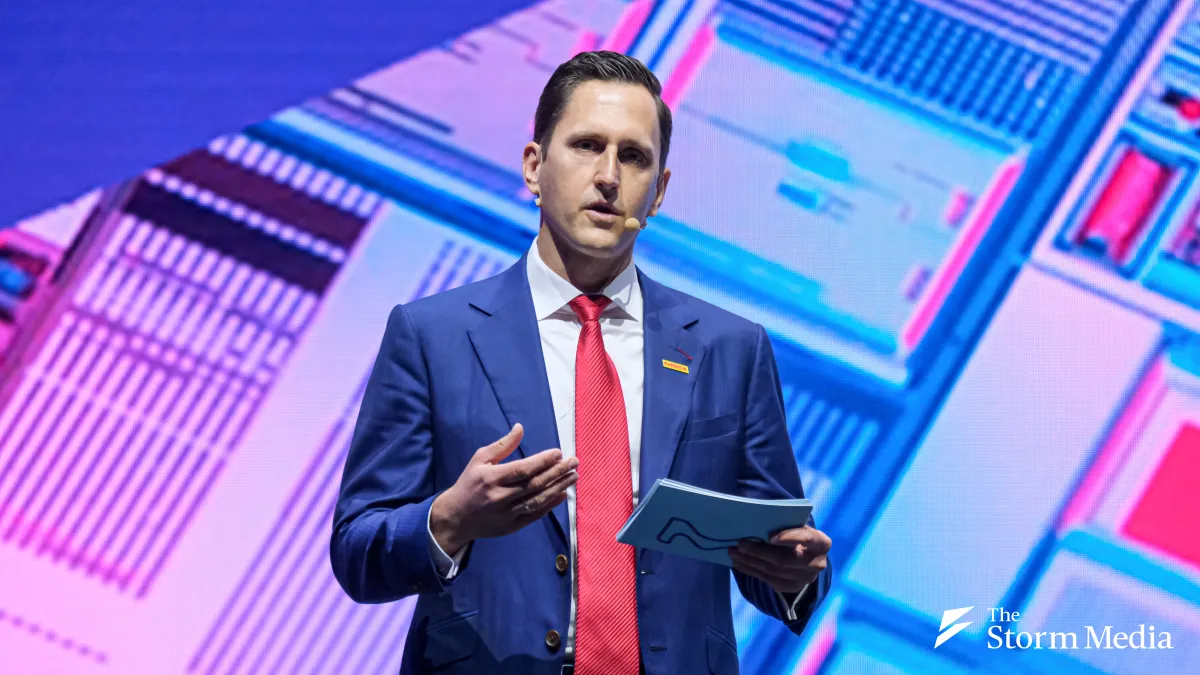
Germany's Merck KGaA (Frankfurt: MRK), long recognized for its liquid crystal and OLED display materials, has quietly executed one of the semiconductor industry's most consequential pivot stories. Speaking at the SEMICON Taiwan 2026 CEO Summit on September 2, Merck Executive Board Member and Electronics CEO Benjamin Hein disclosed that semiconductor-related products now account for roughly 80 percent of the company's Electronics Technology segment — a business generating approximately €3.5 billion in annual revenue.
That translates to around €2.8 billion tied to chips — a stark reversal from less than a decade ago, when Merck's semiconductor footprint was, by Hein's own description, negligible. "Less than ten years ago, we had almost no semiconductor revenue," he told the audience at Nangang Exhibition Hall in Taipei.
A Semiconductor Pivot Decades in the Making
Merck's transformation was not accidental. The company, which marks its 350th anniversary this year, made its defining bet in 2019 when it acquired Versum Materials — a former Air Products spin-off specializing in semiconductor chemicals — for approximately €6 billion. That deal brought a portfolio of thin-film materials, specialty gases, and advanced deposition chemistries now central to leading-edge chip manufacturing.
Combined with sustained organic investment, Merck has since expanded into patterning, planarization, advanced packaging, and materials delivery and measurement — spanning both front-end-of-line processes and the packaging steps that increasingly determine chip performance. Hein noted that "less than ten years" describes the pace of the shift, not a precise financial comparison between specific years.
Taiwan as the Epicenter of Merck's Materials Strategy
Taiwan holds a specific strategic weight in Merck's semiconductor story. Hein identified the island as the world's largest single semiconductor materials market — and the home of the company's most ambitious infrastructure investment to date.
Merck entered Taiwan in 1989 and now operates 13 sites across the island, employing more than 1,200 people in research and development, manufacturing, and customer technical services.
Its Kaohsiung Semiconductor Materials Megasite — a €500 million investment (approximately NT$18.5 billion at September 2 exchange rates) spanning roughly 150,000 square meters — has entered full production. The facility is Merck's largest semiconductor materials manufacturing site globally, producing thin-film materials, specialty gases, and formulated materials for advanced nodes.
Hein emphasized that the Kaohsiung site is about more than capacity. Placing R&D and production close to Taiwan's leading chip fabs shortens the feedback loop between material supply, technical support, and customer qualification — a critical edge as advanced materials require iterative testing against specific process conditions before they can be adopted.
AI Forces Materials Into the Design Loop
The central theme of Hein's remarks was how artificial intelligence is restructuring where value is created in the semiconductor supply chain — and what that demands from a materials supplier.
As AI chips push into gate-all-around transistors, backside power delivery networks, high-bandwidth memory, and 3D packaging architectures, the influence of materials on electrical characteristics, thermal management, interconnect performance, and yield has grown substantially. Hein argued that materials suppliers can no longer wait for customers to finalize designs before delivering off-the-shelf chemicals to specification.
"Value optimization is shifting from the component level to the system level," he said. Materials, process integration, delivery, metrology, and defect inspection must be integrated earlier in the development cycle to keep pace with the rapid refresh cadence of AI platforms.
Chip performance, Hein noted, is no longer determined by transistor scaling alone. It now emerges from the interplay of compute architecture, memory, advanced packaging, networking, and software — and materials sit at the intersection of all of them. The Merck that Benjamin Hein described at SEMICON Taiwan 2026 is not the display-materials company the industry recognized a decade ago. It is, by the numbers, a semiconductor materials company that still makes display chemicals on the side.
In Full
SEMICON Taiwan 2026 | Merck's Chip Business Now Commands 80% of Its €3.5B Electronics Revenue
Original Article In Chinese
(Related:
SEMICON Taiwan 2026 | Micron Warns Memory Shortage Will Deepen as AI Drives Demand Across HBM, DDR, and SSDs
|
Latest
)