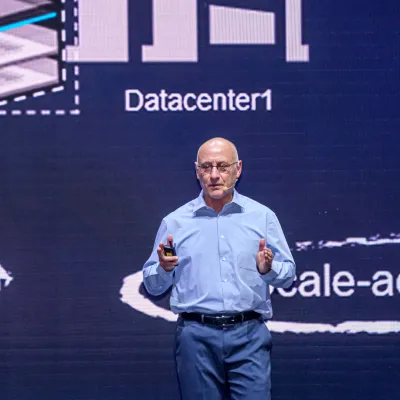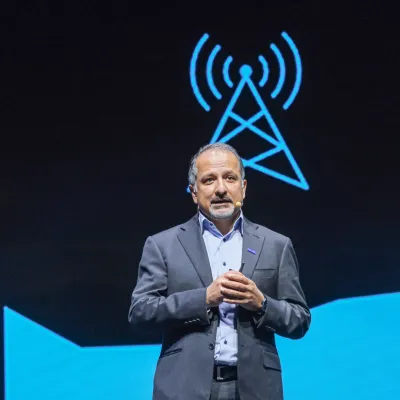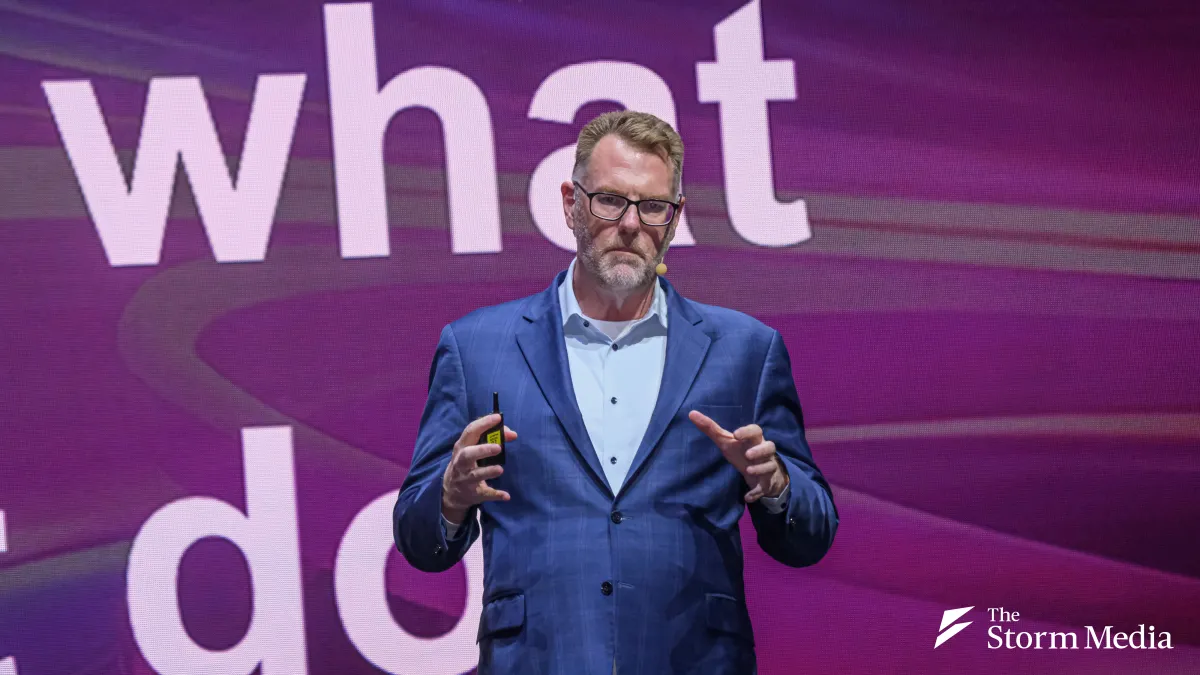
Artificial intelligence is reshaping semiconductor demand in ways the industry has never seen before — and nowhere is the strain more visible than in the global memory market. Speaking at the SEMICON Taiwan 2026 CEO Summit on September 2, Micron Technology President and Chief Technology and Products Officer Scott J. DeBoer delivered a stark assessment: the world is heading into a prolonged period of memory undersupply, and building more capacity is the only way out.
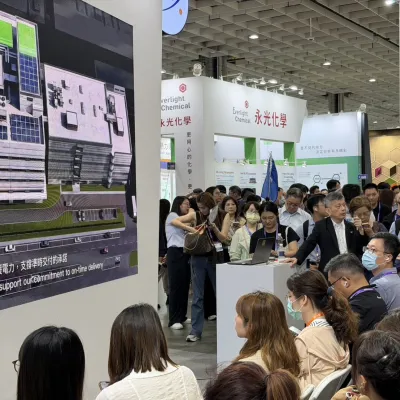
DeBoer's session, titled "From Silicon Innovation to System Intelligence: Architecting the Next Wave of AI," drew a packed audience at the Nangang Exhibition Hall in Taipei as industry leaders from across the semiconductor ecosystem gathered for SEMI's flagship annual event.
Memory No Longer a Commodity
For decades, memory chips were treated as fungible components — bulk-ordered, price-sensitive, and largely interchangeable. AI has dismantled that assumption entirely. DeBoer told the audience that AI has fundamentally changed the way systems are architected, elevating memory from a background component to a primary determinant of overall system performance.
"Memory is no longer a commodity," DeBoer said. "It now directly determines what AI systems can do." The shift reflects how AI workloads are structured: unlike conventional computing, where processing power is often the bottleneck, large-scale AI inference and training are frequently constrained by how fast data can be moved in and out of memory.
AI Data Centers Are Pulling Every Memory Type at Once
The scale of AI data center build-outs has triggered simultaneous surges across multiple memory categories. High-bandwidth memory (HBM) — the stacked, high-speed memory used in AI accelerators — has received the most attention, but DeBoer emphasized that demand pressure extends far beyond HBM alone.
DDR modules, low-power DRAM, and high-performance solid-state drives are all seeing accelerating demand as hyperscalers expand their AI infrastructure. Each layer of the memory hierarchy is being pulled in the same direction at the same time, leaving little slack in the supply chain to absorb shocks or sudden demand spikes.
Edge Devices Add Another Layer of Pressure
Cloud AI would be challenging enough on its own. But the edge is emerging as an equally powerful demand driver — and it is competing for the same production capacity. Automotive applications, humanoid robots, and industrial edge systems all require memory solutions that deliver higher bandwidth while consuming less power, specifications that overlap with the demands of data center components and strain the same fabs and process nodes.
The result, DeBoer noted, is a capacity squeeze felt simultaneously from both ends of the market: cloud-scale AI infrastructure demanding massive volumes at the high end, and edge intelligence pushing the boundaries of performance-per-watt at the other.
Efficiency Gains Cannot Replace New Capacity
With memory production unable to keep pace, some have argued that chipmakers and system designers can bridge the gap through better efficiency — doing more with the memory that already exists. DeBoer was direct in pushing back against that reasoning. Efficiency improvements matter, he said, but they cannot substitute for actual capacity additions.
Micron has been investing heavily in advanced packaging and next-generation memory architectures, including HBM4E, which promises further leaps in bandwidth and energy efficiency. But DeBoer made clear that these technology advances are complements to — not replacements for — the hard work of building new manufacturing capacity. The company is also investing $10 billion in long-term AI R&D and has established a $250 million venture fund to seed next-generation memory applications.
The bottom line, as DeBoer framed it for the SEMICON Taiwan audience: the global memory industry will face severe undersupply for years to come, and the industry must act accordingly — investing in capacity, technology, and the supply chain relationships needed to sustain the AI revolution.
In Full
SEMICON Taiwan 2026 | Micron Warns Memory Shortage Will Deepen as AI Drives Demand Across HBM, DDR, and SSDs
Original Article In Chinese
(Related:
SEMICON Taiwan 2026 | KLA Warns One Defect Can Wipe Out 20% of Yield as AI Chips Near Reticle Limits
|
Latest
)