Taiwan's Foreign Minister Lin Chia-lung (林佳龍) returned home from Palau on September 3 with an unusual complaint about his own security detail during the trip: Chinese plainclothes agents, he said, seemed to be everywhere. Speaking to reporters in Taipei the next morning, Lin described near-constant shadowing at almost every venue he visited during the 55th Pacific Islands Forum (PIF) summit, calling it a thinly disguised form of espionage and evidence of Beijing's growing willingness to intimidate a Pacific partner that neither China nor Taiwan can claim as a full member state.
Lin's week-long trip, which ran from August 27 to September 3, included Taiwan's participation in the PIF opening ceremony, a Taiwan Night reception co-hosted with Palau, and an invitation from Palauan President Surangel S. Whipps Jr. to tour the Pacific Prosperity Exhibit alongside representatives from the United States, Japan and Australia. Lin also joined the 30th Taiwan-Pacific Islands Forum country dialogue, hosted by Whipps, where talks focused on workforce training and deeper regional ties.
Pacific Leaders Demand Notice Before Missile Tests
The most consequential outcome of the summit had little to do with Taiwan directly. Despite pressure from Beijing, the forum's 18 members reached a joint communique on September 3, which Whipps read aloud at a late-night press conference. The lone holdout was Naoero, the Pacific state formally known as Nauru, which severed ties with Taiwan in 2024 and restored its traditional name this past July.
The communique calls on any country testing intercontinental ballistic missiles to give at least 24 hours' advance notice, and it voices concern over a recent test that flew over multiple member states without adequate warning. The statement does not name China outright, but the timing left little doubt about which country prompted it.
Beijing Accuses Palau Of Trying To Hijack The Forum
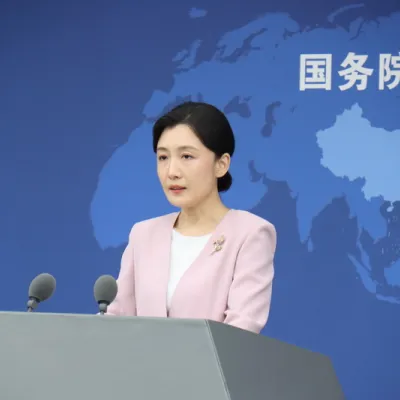
China's Ministry of Foreign Affairs pushed back within hours. Spokesperson Guo Jiakun told a routine briefing that Beijing had already made its position on the test clear and accused Palau of repeatedly stirring up the issue in an attempt to pull other forum members toward its own stance, calling the effort misguided and doomed to fail. Guo maintained that China pursues a defensive national security policy, has no interest in military expansion, and wants to work with South Pacific countries to preserve regional peace and prosperity.
Lin Calls China's Approach Repulsive
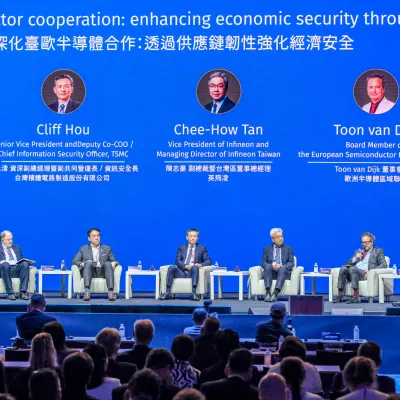
Lin, who landed back in Taiwan the evening before his press remarks, spoke to reporters after a ceremony marking a semiconductor packaging cooperation agreement between Taiwan and Lithuania. He argued that Beijing's so-called wolf-warrior diplomacy tends to fracture Pacific unity rather than build influence, calling the approach not just distasteful but actively counterproductive. He noted that China's intimidation goes beyond rhetoric, pointing to the long-range ballistic missile test that alarmed Pacific nations and ultimately pushed PIF leaders to pass a resolution rebuking China for undermining regional peace and solidarity.
A Guest That Tried To Act Like The Host
Describing the dynamics inside the summit, Lin said the forum's 18 full members are the actual decision makers, while China attends as a dialogue partner and Taiwan as a development partner, placing both on the same guest-level footing. He said Beijing, rather than deferring to that arrangement, tried to flip the script, using threatening language and warning that Taiwan's participation would always carry consequences, and even branding Palau an unsafe travel destination. Lin called the posture absurd and ironic in the eyes of the Pacific nations watching it unfold.
Taiwan Rejects A Zero Sum Rivalry
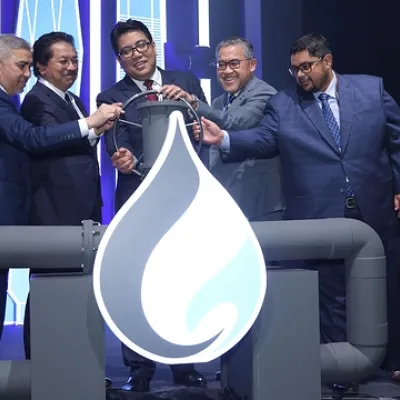
Lin framed Taiwan's presence in the region as guided by what diplomats call the Pacific Way, a spirit of consensus and mutual respect, in contrast to what he described as Beijing's all-or-nothing approach to competition, which he said has no place in the Pacific. He pointed to Taiwan's continued outreach to allies and like-minded partners, including its early pledge of support for the Pacific Resilience Facility, a regional fund meant to help island nations withstand climate shocks, along with separate efforts to help partner countries strengthen digital infrastructure and trade.
On the reports of surveillance, Lin said the presence of plainclothes Chinese personnel at nearly every event he attended amounted to espionage and a violation of both national sovereignty and the public's right to take part freely in political life, while thanking Palau for tightening security around the delegation. He said he remains confident that justice travels the world, adding that the more aggressively China displays what he called its expansionist and domineering instincts in the Pacific, the more sympathy Taiwan is likely to gain.