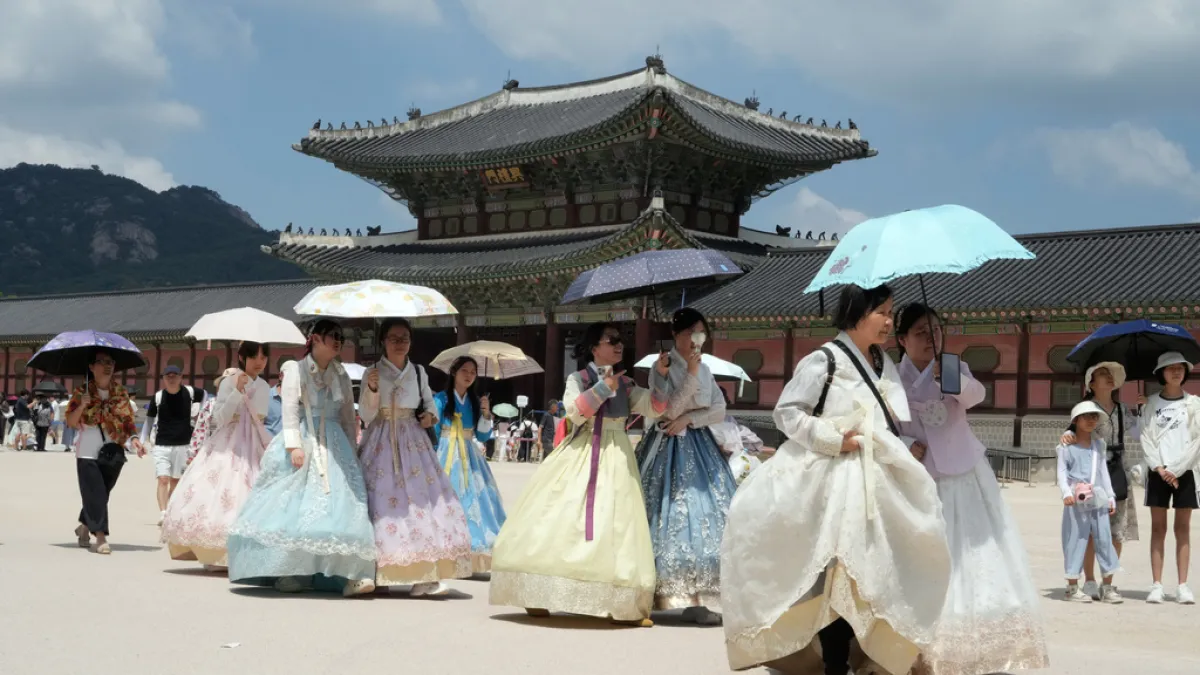
Taiwanese travelers heading to South Korea this season have a reason to look beyond the usual lineup of barbecue restaurants and fried chicken shops. Seasonal grapes and white peaches are flooding local markets right now — and the prices are turning heads.
A Bunch of Grapes for Less Than NT$50 (USD$1.56)
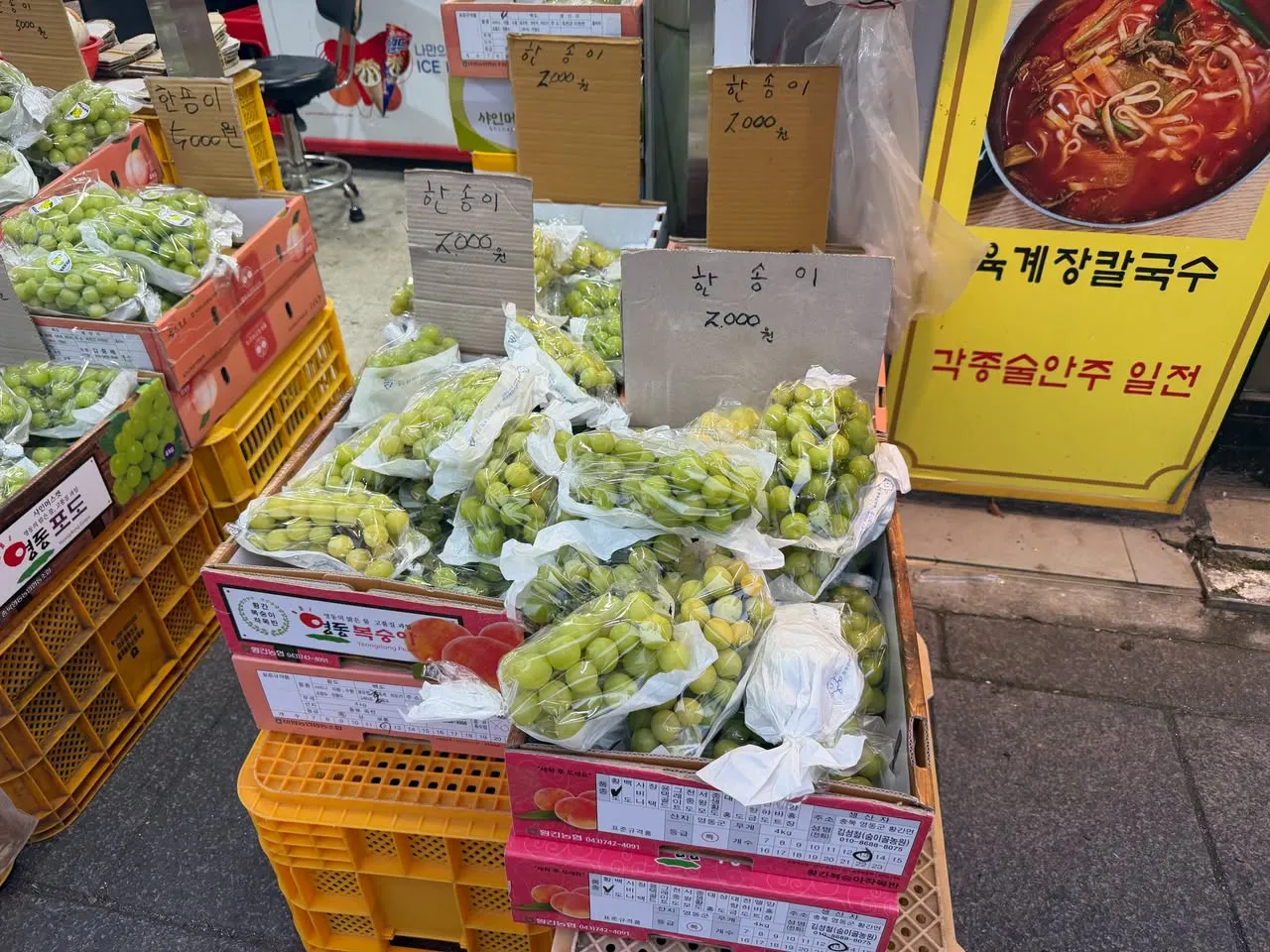
The FB travel page "不奇而遇 Steven & Sia" recently flagged the remarkably low cost of seasonal fruit at neighborhood stalls across South Korea. A large bunch of grapes was spotted selling for just 2,000 Korean won — the equivalent of roughly NT$46 (USD$1.44) — a price point the blogger described as nearly impossible to walk past.
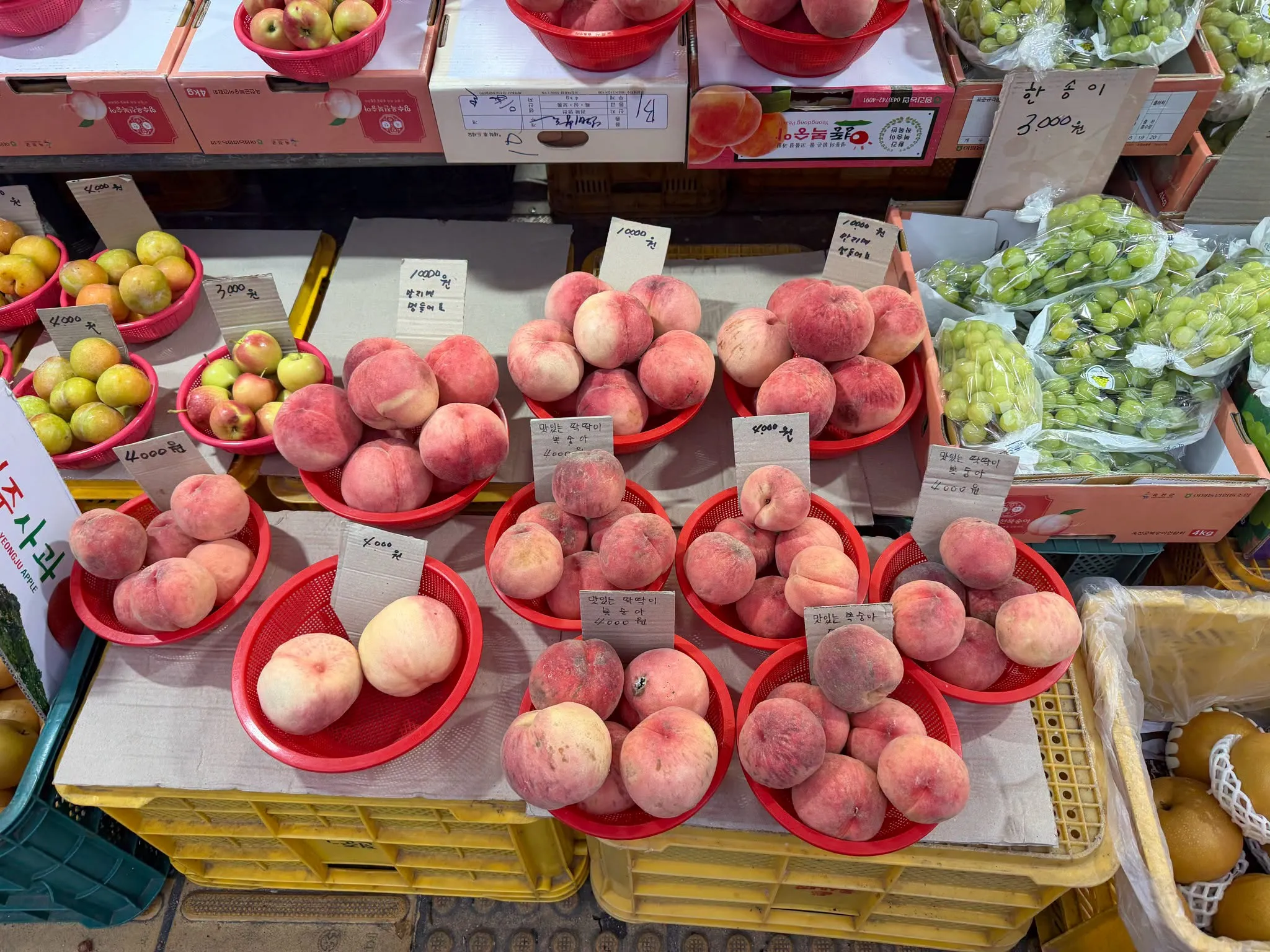
White peaches are similarly priced to move. A basket of seven to eight peaches runs about 10,000 won, or approximately NT$230 (USD$7.19), putting the per-fruit cost at around NT$30 (USD$0.94). With both fruits hitting their seasonal peak simultaneously, the travel page declared the current period an ideal window for fruit lovers visiting Korea — and advised travelers to work local markets and fruit stalls into their itineraries.
Fruit Stalls Offer a Budget Alternative to Korea's Most Crowded Tables
Korean travel itineraries among Taiwan tourists tend to center on signature food experiences: Korean barbecue, fried chicken, tteokbokki, and specialty coffee shops. The travel bloggers argue that seasonal fruit deserves a spot on that same list — especially when prices are this low and the quality peaks at this time of year.
The post sparked lively debate in the comments. Many readers marveled at the grape prices, while others traded opinions on variety: yellow peaches were praised for their intense aroma, while white peaches divided opinion — some found them refreshingly light, others noted they can run firmer than expected. A number of commenters were already planning autumn trips to Busan with Muscat grapes in mind, as that variety comes into season later in the year.
Shop Around — Prices Vary by Stall and Neighborhood
The travel page noted that the 2,000-won grapes and 10,000-won peaches reflect prices seen at one specific vendor, and that costs will vary depending on location, variety, size, and quality. Travelers are encouraged to browse a few stalls — at supermarkets, traditional markets, and neighborhood fruit stands — before buying, as selection and pricing differ across the city.
For fruit enthusiasts with a Korea trip on the calendar, the advice is straightforward: leave room in the itinerary for at least one stop at a local market, and don't let the whole food budget go to restaurant queues.
(Related:
Planning a Trip to Korea? Don’t Get Stranded at the Wrong Station After KTX Merger
|
Latest
)