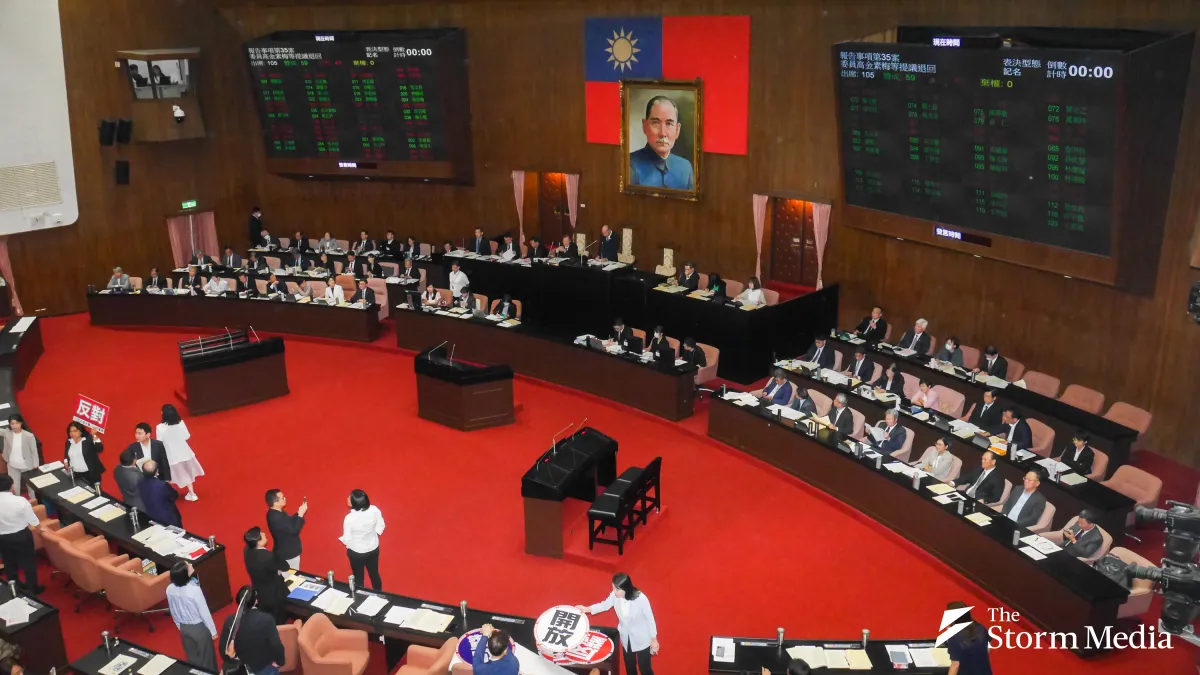
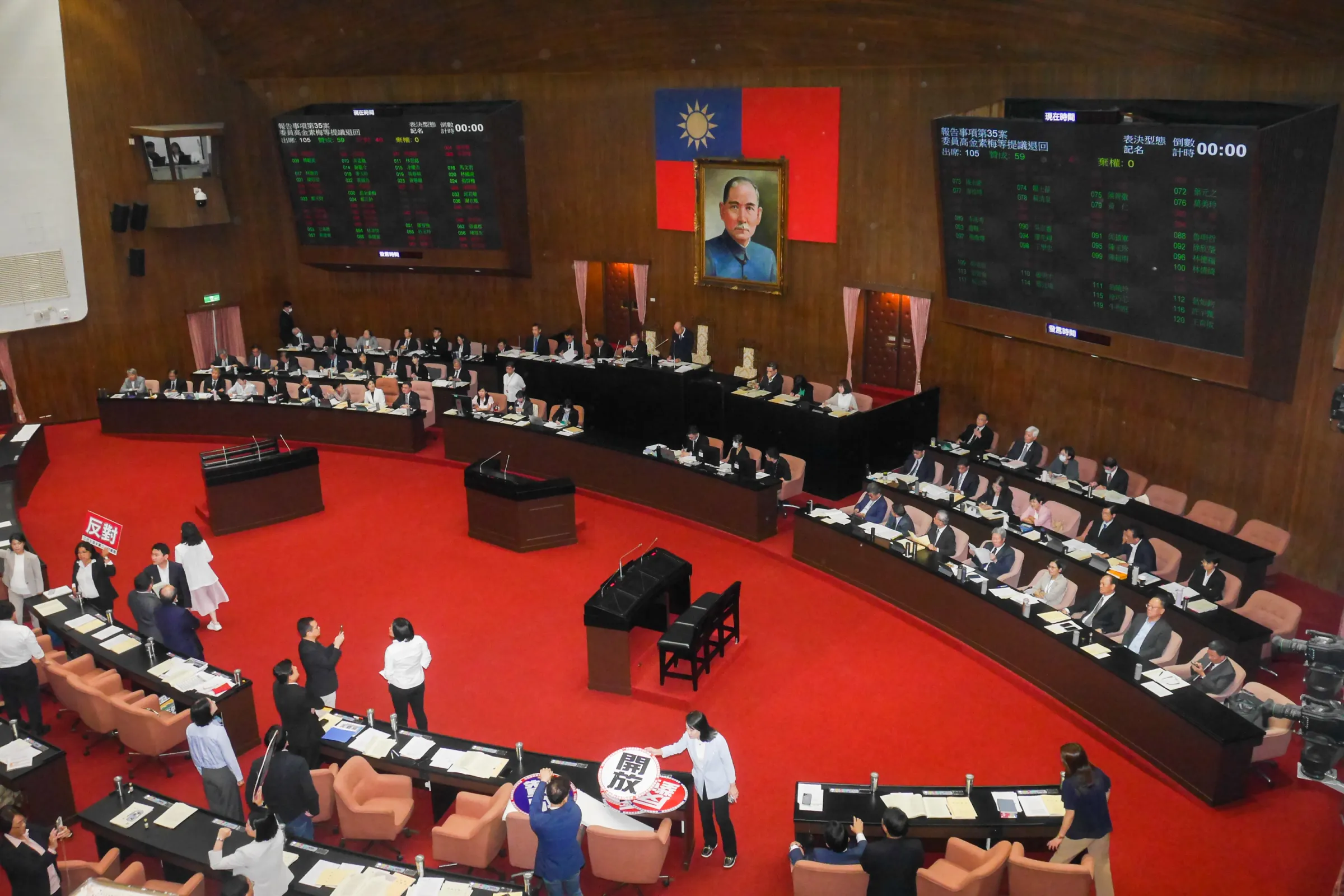
Following the United Kingdom's move to a generational smoking ban, Taiwan now has a legislative proposal pointed in the same direction. Kuomintang Legislator Liao Hsien-hsiang (廖先翔) and others have introduced amendments to Articles 17 and 37 of Taiwan's Tobacco Hazards Prevention Act that would bar anyone from supplying tobacco products, or the essential components of designated tobacco products, to people born on or after January 1, 2009. The restriction would not expire with age, meaning anyone classified as part of the "smoke free generation" could never legally obtain tobacco, even after turning 20, 30 or older. The bill has already been sent directly to a second reading in the Legislative Yuan. If it clears a third and final reading, Taiwan's tobacco control regime would shift from today's rule, that no one under 20 may obtain tobacco, to a lifetime ban defined entirely by birth date. Supplying tobacco or its designated essential components to someone in the banned generation would carry a fine of between NT$10,000 and NT$250,000.
Not A Higher Age Limit, But A Lifetime Ban For Some
Taiwan's current Tobacco Hazards Prevention Act sets a minimum legal purchase age: no one under 20 may obtain tobacco, and the restriction disappears once someone turns 20. A generational ban works differently. Rather than raising that threshold to 21 or 25 all at once, it draws a line at a specific birth date, so the population legally allowed to buy tobacco shrinks a little further every year.
Under Liao's version of the bill, someone born on December 31, 2008 could still legally buy tobacco once they turn 20. Someone born just one day later, on January 1, 2009, could never legally obtain it at all. The point of the design is to steadily shrink the population eligible to buy tobacco until new generations are effectively locked out of the cigarette market altogether. The bill's explanatory notes cite Health Promotion Administration survey data showing an adult smoking rate of roughly 12.8 percent in Taiwan in 2024, translating to an estimated 2.7 million smokers. The bill's sponsors argue that while the existing age limit delays young people's first exposure to tobacco, it does nothing to stop people from taking up smoking once they become adults, making it necessary to shift focus from restricting minors to preventing an entire generation from starting in the first place.
Three Different Paths From The UK, The Maldives And New Zealand
Britain's Parliament passed the Tobacco and Vapes Act this year, and it received royal assent on April 29, banning the sale of tobacco products to anyone born on or after January 1, 2009. Under the law, the minimum legal purchase age in the UK will effectively rise every year, though the focus of the law is on barring vendors from selling tobacco rather than criminalizing possession or use itself.
The Maldives has adopted a stricter version. Since November 1, 2025, it has banned both the purchase and use of tobacco by anyone born on or after January 1, 2007, and barred vendors from selling to them, making it one of the few countries to have actually put a generational tobacco ban into practice.
New Zealand was the first to pass similar legislation, back in 2022, originally intending to ban tobacco purchases for anyone born after 2009 alongside measures to reduce nicotine content in cigarettes and shrink the number of legal retail outlets. After a change in government, however, the rules were repealed before they ever took effect. New Zealand's experience suggests that a generational ban is not purely a public health measure. It can also be reversed by a change in ruling party, enforcement costs or shifting policy priorities.
Taiwan's Minister of Health and Welfare, Shih Chung-liang (石崇良), has said that few countries have used legislation to impose a generational tobacco ban, and that the approach remains largely experimental worldwide. Britain has passed its law but has yet to fully implement it, while New Zealand withdrew its version before it ever took effect, leaving genuinely long term implementation examples still quite limited.
How Would Stores Identify The Banned Generation?
The most immediate enforcement burden from a generational ban would fall on convenience stores, supermarkets, tobacco and alcohol retailers and other sales channels. Under the current system, clerks mainly need to judge whether a customer appears to be at least 20. Under a generational ban, even a customer who clearly looks like an adult might need to have their exact birth date verified.
As the banned generation ages, customers in their 30s, 40s or older could eventually be asked to show identification as well. Building a consistent verification standard that avoids conflict between frontline staff and customers, and determining liability when a retailer mistakenly makes a sale, would both need clear rules before the law could take effect. The bill's language bars "any person" from supplying tobacco to the banned generation, not just retailers, raising a separate enforcement question over whether a purchase made through a friend or family member, a private resale, or an online order would also count as illegal supply. If the legal market is restricted without a corresponding drop in demand, proxy purchasing, black market trading and unregulated products could all increase as a result.
Another point of controversy is generational fairness. Two adults, differing only by a single day of birth, would be subject to permanently different rules for the rest of their lives, a gap likely to raise questions about equal treatment, adult autonomy and whether the restriction is proportionate. Supporters argue that drawing the line by birth generation is a workable way to phase out tobacco use without directly affecting people who already smoke. Critics may counter by asking whether a government can permanently bar some adults from buying a product that other adults remain free to purchase legally.
A Smoke Free Generation Needs More Than A Sales Ban
Taiwan has already banned e-cigarettes outright under the Tobacco Hazards Prevention Act and has pushed school education campaigns, enforcement against violations, monitoring of online sales and smoking cessation counseling. For a generational ban to work, drawing a legal line by birth year would need to be paired with stable cessation services, retail oversight, enforcement against online transactions and efforts to track how young people are still obtaining tobacco.
If the policy only blocks legal sales without addressing underlying demand, it risks simply shifting transactions from physical stores to private proxy buyers or underground markets. But if it also reduces the odds that young people are ever exposed to tobacco in the first place, while cutting back on advertising, peer influence and retail incentives, it could gradually shrink the population of new smokers over time.
Taiwan's Health Promotion Administration has said different countries adopt different measures depending on their circumstances, social context and public health needs, and that there is no single consistent model for a smoke free generation policy, with long term effectiveness still to be determined. It said it will keep gathering international experience and consulting with the public as it weighs the policy carefully, balancing public health, social consensus and practical enforceability. Minister Shih also stressed that every policy carries both benefits and costs, and that "the benefits must outweigh the costs" for it to be worth pursuing. The real debate over a generational smoking ban is no longer whether smoking harms health, but whether permanently restricting adults' access to tobacco based on their year of birth can become an effective, enforceable and socially accepted policy tool. Now that the bill has advanced to a second reading, the question facing Taiwan is no longer simply whether to ban, but how to ban it, and what happens afterward. (Related: How Zombie Vape Pods Are Luring and Trapping Users Across Asia | Latest )