As tensions in the Middle East rapidly escalate and the risk of a US-Iran confrontation grows, Taiwan's strait security has returned to the core of international strategic debate. Against this volatile backdrop, Taiwan's special defense budget has become a legislative priority of the absolute highest order.
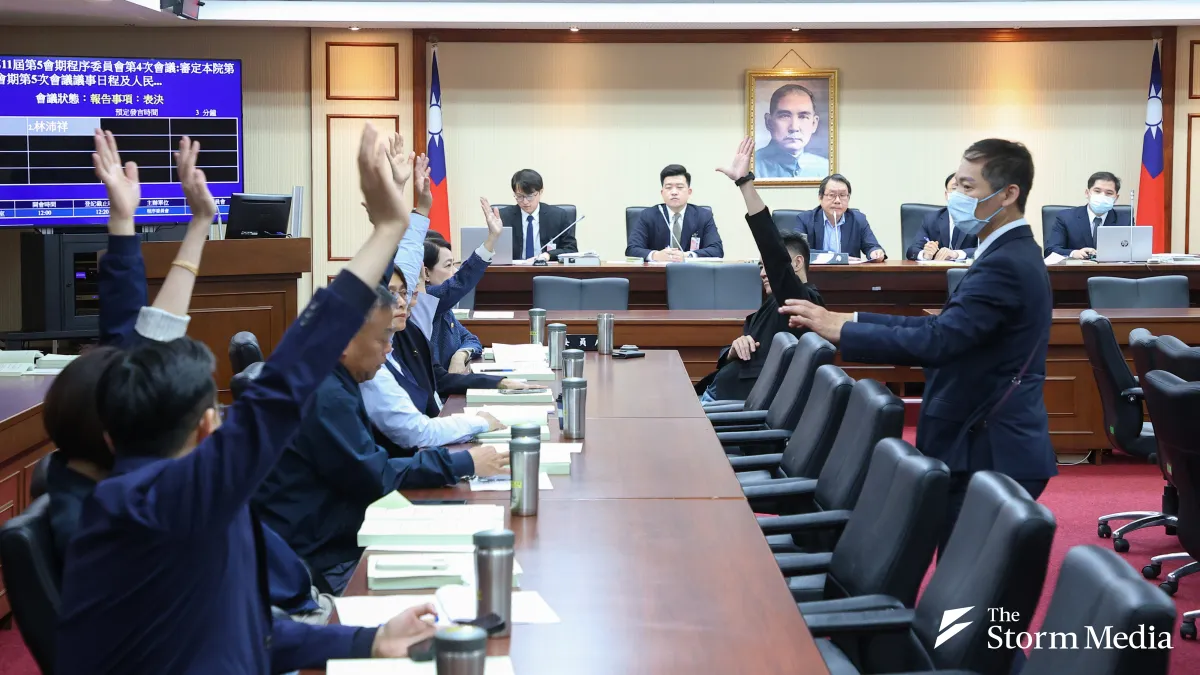
For Washington, the defense budget serves as a critical, highly visible signal of whether the Legislative Yuan is genuinely willing to strengthen the island's military capabilities. Formal review of competing party proposals began on March 23, making this session's debate arguably the most consequential political battle of the current legislative term.
Among the various proposals, the Kuomintang has put forward a version totaling approximately NT$380 billion(roughly USD 11.6 billion), plus additional unspecified items. However, international analysts quickly noted that this figure still falls significantly short of official US expectations and strategic requirements.
Compounding this difficulty, KMT lawmakers from different regions and generations hold sharply divergent views on the appropriate budget scale. This has generated intense internal friction even before the proposal entered formal legislative review.

A Trusted Interlocutor Goes Silent
What has drawn particular international attention is the conspicuous, unexpected silence of Legislative Yuan Vice President Johnny Chiang(江啟臣). Washington has reportedly taken notice of his sudden absence from the debate, pointedly asking: "How come Johnny is so quiet?"
In the assessment of US officials and analysts, Chiang stands apart from many KMT politicians due to his sustained, years-long engagement in parliamentary diplomacy and global security affairs. He is widely regarded as one of the few KMT figures capable of fully comprehending US strategic language and the complex logic of international policy.
Before the KMT's formal proposal took shape, Legislative Yuan President Han Kuo-yu (韓國瑜)and Chiang jointly issued a strong statement declaring that defense appropriations should be a top priority. They called on lawmakers to adopt a cooperative, cross-party approach to defense investment oversight, given rapidly shifting regional security conditions.
That initial statement was widely interpreted as a reassuring signal that the KMT was willing to maintain vital policy flexibility on the defense budget. What ultimately caught Washington off-guard was not the NT$380 billion figure itself, but that Chiang largely ceased making any public statements after the party consolidated around that specific number.

Taichung Mayoral Politics Constrain Chiang
According to sources with deep knowledge of internal dynamics, Chiang's silence reflects multiple overlapping, highly practical political calculations. Any public disagreement from Chiang over the official budget figure would almost certainly be read as a sign of damaging intra-party discord.
Furthermore, the KMT is currently in a highly critical phase of its candidate selection process for the upcoming Taichung mayoral race. Chiang is locked in a tight polling competition with KMT legislator Yang Chiung-ying, making any high-profile stance on defense spending or US relations a massive electoral risk.
A third major constraint stems directly from Chiang's institutional role as vice president of the legislature. While the position carries important procedural functions, it does not confer substantive control over the party's overall policy direction.
Internal KMT Reservations Go Ignored
Chiang is certainly not alone in his extreme reticence, as a similar pattern of public silence has prevailed across the KMT's younger and mid-career lawmakers. According to sources, many of these legislators harbored deep reservations when the party proposal first emerged.
Lawmakers who participated in closed caucus discussions noted that the legislative text is structurally underdeveloped and fails to conform to standard legislative practice. Several members considered a comprehensive revision necessary to fix glaring inconsistencies regarding arms procurement items.
Legislators with legal backgrounds also flagged a rarely used approach in the bill's opening provisions that explicitly names a specific regional conflict scenario. This unusual language raised serious concerns about potential, unintended constraints on the statute's legal applicability and long-term institutional flexibility.
Despite these widespread concerns, the formal version held firm at approximately NT$380 billion, with no material adjustment to internal feedback. Many lawmakers gradually concluded that the direction had been rigidly set by party leadership, making further internal debate entirely pointless.

Washington Looks To Han
With Chiang opting for silence and younger KMT lawmakers unable to consolidate into an effective voting bloc, Washington is increasingly hoping a senior KMT figure will step forward. Sources indicate that US officials are now heavily relying on Legislative Yuan President Han Kuo-yu to creatively break the deadlock.
Han has previously signaled deep caution about the KMT's resistance to arms procurement, warning his colleagues about the severe dangers of a strategic miscalculation. During a recent Lunar New Year gathering, Han expressed hope that governing and opposition parties could successfully convert large political conflicts into small ones.
Sources note that US perceptions of Han have shifted noticeably compared to previous periods, with his overall favorability among American interlocutors currently on the rise. Washington is said to be counting on him to serve as an effective, honest broker capable of helping move the critical defense budget toward final passage.
As the special defense budget enters its substantive review phase, the question of whether Han can fulfill the role Washington envisions is absolutely crucial. It represents a massive test of whether his political standing and long-term value as a key institutional actor can be further consolidated.
Original Article in Chinese